Showing posts with label Environment. Show all posts

Wednesday, October 15, 2014

Monolithic


When I drive home from work, I sometimes pass the old Kaiser plant. For some reason, I find it compelling to see the barren tree branches standing before the monolithic face of industrial brick. On the one hand, the ruins of industrialism are sober reminders of environmental destruction on a massive scale. On the other hand, I sometimes lay awake wondering how these places might be reclaimed and revitalized. 

In the end, the message of the tree might be the assurance that nature will reclaim itself on a non-human time scale. If we're lucky, we might get to help the process. Otherwise, our descendants may be the ones to witness these changes. 


Tuesday, October 14, 2014

Greatest Story of Our Generation


The Greatest Story of Our Generation is an inspirational video narrated by Morgan Freeman that examines the impact of human beings on the environment. It challenges us to consider how we are contributing to the vitality of life on the planet - or not, and it invites us to take action for a healthier tomorrow.

Thanks Tim for posting this video! 

Friday, September 26, 2014

Arrow Lakes News


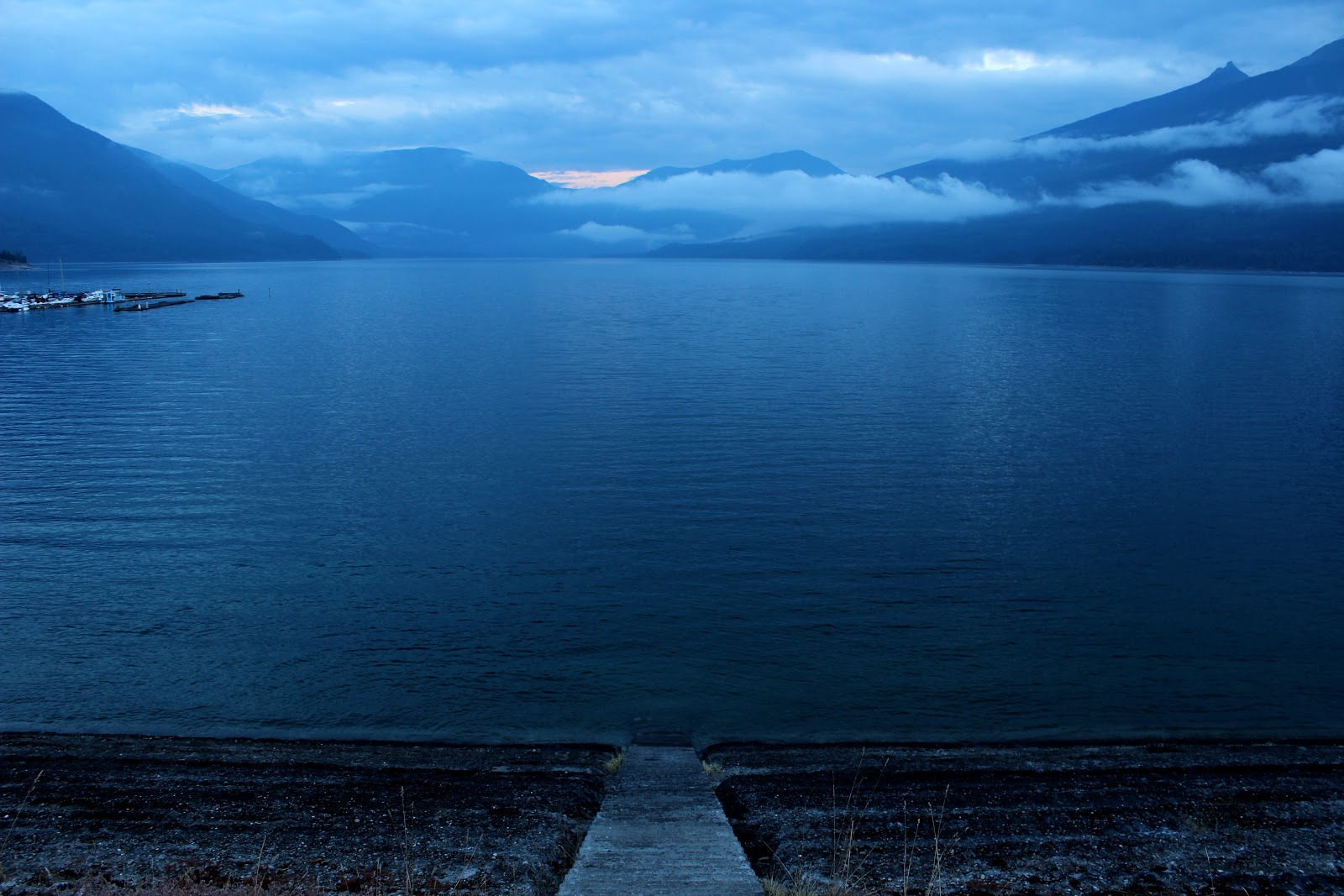
Several weeks ago, I re-posted an article from the Valley Voice, a small newspaper in British Columbia, where the author reported a multi-faith prayer vigil for the health of the Columbia River. The same event was also reported by the Arrow Lakes News in Nakusp. 


The Arrow Lakes News article, written by Ryan Willman, stated in part: 

On the banks of the Arrow Lakes reservoir a solicitous group gathered and listened to Barry Moses, a member of the Spokane Tribe, describe a dream that he had as a young man. In the dream, the world was barren and dry, devoid of life; then suddenly the earth shook and a gush of water was released from the rocks forming a new river. Moses stood on the banks and watched the river flow until he noticed fish leaping through the waves. He jumped in and followed the fish in the upriver journey until they all reached a beautiful, fertile land. Paradise. 

“This is what I pray for today,” Moses sums up, “I pray for the return of the salmon and the restoration of the river.” 

Moses shared his vision, a prayer and a song with a group of gathered community members who attended a vigil to raise awareness about the plight of the Columbia River. This vigil was part of a series of multi-faith events that began August 6 in Washington and continued every day up the river ending with the last vigil scheduled at the source of the Columbia, Canal Flats. 


The article continued:

Shelly Boyd, member of the Confederated Tribes of the Colville Reservation, spoke of her connection to the Arrow Lakes area and expressed the need for unity and cooperation. “This side of the line, that side of the line. The water doesn’t even know there is a line,” she expressed. Boyd contributed to the vigil with a prayer and sang a traveling song in her native tongue.

Tuesday, September 02, 2014

Prayer Vigil


Several weeks ago, I participated in a multi-faith prayer vigil in Nakusp, British Columbia dedicated to the health of the Columbia River. During the service, my friend Shelly Boyd offered a prayer in the Colville Salish Language. I also offered a prayer in the Spokane Language. 

The Valley Voice, a local newspaper, reported the vigil and included our photograph (above). I was happy to read that the author also mentioned a dream that I shared during the vigil regarding the return of the salmon. Jan McMurray wrote, "Moses spoke about a dream he had where the salmon came back to the Columbia River. 'I'm hoping to see this in my lifetime,' he said."

To read the whole article, click this link, download the paper, and turn to page 3. On the same page, the Valley Voice also reported a Salish language class in Nakusp held by Shelly and LaRae. 


The vigil also included a pastoral letter written by the Catholic bishops of the Columbia River Watershed. The letter read in part: 

The Columbia Watershed and all creation are entrusted to our loving care. As persons created in the image of God and as stewards of creation (Genesis 1-2), we are challenged to both use and respect created things. The watershed is ultimately God's; human beings are entrusted with responsibility for it, concern for its species and ecology, and regulation of its competitive and complementary uses. The watershed, seen through eyes alive with faith, can be a revelation of God's presence, an occasion of grace and blessing. There are many signs of the presence of God in this book of nature, signs that complement the understandings of God revealed in the pages of the Bible, both the Hebrew and Christian Scriptures.

The full letter may be read here


Boats in the Columbia River near Nakusp. 


The waterfront in Naksup. 


Musicians participated in the prayer vigil. 


More musicians...


Members of the community gathered. 


The Columbia River...


Concrete steps lead to the water. 


The mountains tower above the water.

Thursday, September 19, 2013

Climate Change Causing an Increase in Poison Ivy


A few weeks ago, I wrote about finding an increase in poison ivy at Little Falls. I didn't mention that I also saw a dramatic increase of  poison ivy surrounding the petroglyphs in Tum Tum, Washington. And of course, not to mention the plants growing at Drummheller Spring. It was strange to imagine why this plant is increasing so much. 

Then I found an article that blames climate change for the increase. In experiments, exposing poison ivy to increased carbon dioxide results in significant growth. This makes me wonder about the growth I have witnessed this year. Check out the article here

Tuesday, August 27, 2013

Grand Coulee Dam


After we left Dry Falls, we continued driving to Grand Coulee Dam to see the laser show. I had forgotten how much the presentation is really a propaganda piece for the American colonial domination of the Columbia River. I mean, the lasers are fun to watch, but it was depressing to hear the narrator describe the destruction of the tribal lifeways, not to mention the salmon - only to then justify that destruction. If "man" had not tamed the "wild" waters of the Columbia, the desert would have never reached its full "potential," or so they said. They even said that "man" did what nature could not accomplish when it provided "rain" to the parched soil of central Washington in the form of irrigation. I suppose in their mind the economic benefit of the dam outweigh the cultural and ecological destruction of that massive structure. 

I really didn't like the show, but much to my surprise, my youngest daughter also expressed her displeasure. She said, "I hated that show. They made it sound like God: 'I am the river; I am life,'" she mocked the deep, god-like voice of the narrator. Then she said, "When I grow up, my kids are never allowed to watch that show."

Sunday, July 07, 2013

Development vs. Destruction


For years, I have hiked in the hills above the Little Spokane River. Now the owners are developing the land, and in the process, they have disturbed an important ecological and cultural resource. 

A few personal stories will illustrate the point. 

Some years ago, my aunt told me that she was having a hard time getting a specific plant medicine. I said, "Don't worry auntie, I know a place where you can get as much as you would ever need." She gave me some advice regarding the proper way to both harvest the plant and prepare it for medicine. Then she sent me on my way. When I returned with a large bundle of this plant, she was so happy. She had her medicine for another year. 

Another time, an elderly relative of mine called and said that she needed a specific medicine for a kidney infection. She is very traditional and often refuses modern medicine. However, she does accept traditional remedies. When she called, I went to the same place to gather the necessary plants. Her infection was healed. 

Over the years, I have gone back many times to gather medicine. Now the site has been bulldozed. The top photograph is the exact location of my traditional gathering place. There's nothing left. When I saw it, I was heartsick. Part of me wanted to cry. The other part wanted to find the owner and give them a piece of my mind. 

It's not that I'm opposed to all development, but I am in favor of conscious development. Before we bulldoze an entire mountain, maybe we should ask if we might first develop land in the decaying urban center of our cities and towns. I just don't understand why Americans insist on building further and further into the wilderness while their cities are rotting from the inside out. Second, we should become acquainted with the unique ecological nature of a site before we tear it to shreds. As my stories demonstrate, there was a tremendous value to that place before it was developed/destroyed. 

Soon enough, they'll build their million dollar homes and put up "No Trespassing" signs. I'll have to go someplace else within the ever shrinking wilderness to find medicine for my family. 


Another medicine site 
with bulldozer tracks 
through the center. 

Thursday, May 16, 2013

Georgetown


Last Monday, I visited the Georgetown Campus of South Seattle Community College with several colleagues from the IEL. We caught the 7:00 a.m. flight to Seattle and drove straight to a meeting with representatives from the state board. We discussed the new adult high school completion program that is rolling out next fall. Then we flew home the same day. 


The Georgetown Campus is surrounded by contrast. The lawns are maintained with beautiful flowers, but the neighborhood is quite industrial. 


Flowers and smoke... such contrast. 


On the flight home, we got some great views of the city. 

Friday, May 10, 2013

Creation Spirituality


The Unitarian Universalist Church of Spokane recently hosted a special service about John Denver and Creation Spirituality. To be honest, I was a little skeptical. I'm old enough to remember John Denver from the 1970s when his face sometimes appeared on the television screen during an advertisement for one of his albums. Do you remember those commercials? Song titles scrolled across the screen against a backdrop of photographs of the artist walking in nature. Maybe they played a half dozen ten-second clips from his most popular songs, while the announcer boomed in a pre-canned salesman voice, "These greatest hits and more can be yours if you order now."

Unfortunately, this was my only experience of John Denver. I had no idea that he was a deeply spiritual man with an abiding commitment to protecting the environment. 


Based on my memory of John Denver, I probably would have never gone to the service, but I heard that my friend Stanton was playing guitar and singing several of the songs. In the end, I decided to go, if nothing else than to support a friend. 


Once the service began, I was immensely grateful to learn about John Denver's perspective on Creation Spirituality. Unlike my memory of the chintzy commercials from my childhood, his songs were powerful messages connection, spirituality, and love for the earth. I suppose it was always there, but I never really listened. 

The first verse of his song  Rhymes and Reasons seemed to speak of the despair many of us feel when we consider the current state of the environment:


So you speak to me of sadness

And the coming of the winter
Fear that is within you now
It seems to never end
And the dreams that have escaped you
And the hope that you've forgotten
You tell me that you need me now
You want to be my friend ...


Another verse spoke almost prophetically of the cultural destruction we would eventually face: 

Like the music of the mountains

And the colours of the rainbow

They're a promise of the future
And a blessing for today
Though the cities start to crumble
And the towers fall around us
The sun is slowly fading
And it's colder than the sea ...

Finally, the last verses spoke to the ones who continue to resist the need to limit the impact of human development on the environment:


It is written from the desert

To the mountains they shall lead us
By the hand and by the heart
They will comfort you and me
In their innocence and trusting
They will teach us to be free

For the children and the flowers
Are my sisters and my brothers
Their laughter and their loveliness
Would clear a cloudy day

And the song that I am singing
Is a prayer to non-believers
Come and stand beside us
We can find a better way.


Another song made a huge impact during the service: I want to live

I first heard that song more than ten years ago during a dark time in my life. Through the support of powerful mentor, I came to realize that much of my life was actually a way of dying. When things got tough, I withdrew and disconnected from everything I cared about. This song was part of my re-awakening:

I want to live, I want to grow,
I want to see, I want to know,
I want to share what I can give,
I want to be, I want to live!

For me, the song was a personal affirmation of life, but when I listened again, I realized that the song was also about the earth and all the beauty of nature standing in the face of destruction. This was the earth saying, "I want to live!" When I heard the song from that perspective, I was overcome with emotion, and I wept. I had no idea that the John Denver service would have such a powerful impact on me, or speak to me on such a heart level. 

The pastor included a theoretical foundation for Creation Spirituality, including the work of former Catholic cleric Matthew Fox. I don't suppose that I can now adequately describe the theological underpinnings of Creation Spirituality, but I will end with a quote from the pastor, Rev. Dr. Todd Eklof:

"Creation spirituality does not accept the Doctrine of Original Sin, or the idea that nature is fallen. It accepts instead the Doctrine of Original Blessing."  

Monday, May 06, 2013

Poison Ivy Reprise


My previous poison ivy post generated a surprising number of responses, some with stories regarding their own painful encounters with this plant. My naturalist friend Tim Corcoran wrote a detailed analysis of my photographs and determined with 90% certainty that they were poison ivy. Of course, I would expect nothing less from him. 

His response is very educational and is quoted below:

Ahh, everyone's favorite, Poison Ivy! From a naturalist's perspective, poison ivy is such an amazing plant, especially because it is such a trickster. It takes MANY different forms, from season to season, plant to plant, and even on the same plant!. It is somewhat difficult to make a conclusive determination based on these pictures alone. Ideally, I could see this in person.  
Here is what I see from your pictures:  
1) Compound leaves with 3 leaflets. This means that one leaf is comprised of three leaflets. One way this is apparent is that the leaflets have little to no stems, and that the base of the leaflet stems is no thicker than the rest of the leaflet stem. This is important because a compound leaf will separate from the plant in one point only, at the base of the actual leaf stem which I can see from your first picture is wider than the rest of the stem. So it has compound leaves with 3 leaflets. This is a point towards it being poison ivy. 

2) Leaflets have a single tooth (first & third picture) and slight lobes/teeth (also first & third picture). Another point towards poison ivy.

3) Leaflets are red - point towards poison ivy.

4) Dense flower clusters at leaf base - another point towards poison ivy.

5) Berries are whitish/greenish, with subtle radial depressed lines going around the whole berry (like a pumpkin) - another point towards poison ivy.

6) New growth and berries coming off of a woody stem with alternating leaf scars - another point towards poison ivy.

Additionally, I don't see anything indicating that it is not poison ivy. All that said, I'd say with about 90% certainty that this is poison ivy. I'd need to see it in person to say with 100% certainty. I love how excited everyone always gets about poison ivy. The plant has so many gifts. be sure to read our perspective on "Poison Ivy as Medicine" at the end of our article here: 


Dissatisfied with a 90% rating, I decided to go back for a better look, and I was quite surprised to see that the plants were much more abundant than I previously noticed. The plants were literally growing from between the rocks in a basalt rock slide. In fact, it was actually quite difficult to take a step without stepping on one.


This specimen shows a variety of leaf styles on one plant. No wonder so many people are confused by poison ivy. I'm not quite the expert like Tim, but I'm going to call this at higher than 90%.

Sunday, April 22, 2012

Earth Day


This afternoon, I observed Earth Day by visiting Drumheller Springs to photograph the flowers. The weather has been somewhat dreary, if not depressing, but today was perfect. The sky was clear and the temperature was above 80 degrees.

It's too early for camas flowers, so I was surprised to see the field covered in blue. On closer examination, I discovered that the blue flowers are actually Idaho blue-eyed-grass. It really is quite remarkable that every flower seems to have its day in the sun, as if it were the only one.


Idaho blue-eyed-grass.
Sisyrinchium idahoense.


The arrow-leaf balsamroot was not quite blooming.
Balsamorhiza sagittata.


Narrow-leaved desert parsley.
Lomatium triternatum.


Yellow flowering currant.
Ribes aureum.


Yellow bell.
Fritillaria pudica.


Bitterroot (without the flower).
Lewisia rediviva.


Spreading phlox (I believe).
Phlox diffusa.


I can't tell you how happy it makes
me feel to see all these faces again.

Sunday, August 07, 2011

Reed College


Reed College in Portland, Oregon is a beautiful place. The campus embodies the tradition of its one hundred year history, but it also exemplifies progressive ideals. The school's culture supports an attitude of mindfulness toward others and the environment.  


All throughout campus, I found visual reminders to pause and appreciate the beauty of life. In one instance, I found a literal sign telling drivers to "slow down, observe, & enjoy."


A beautiful lake sits at the heart of the campus, surrounded by wildlife, trees, and hiking trails.  


Several bridges cross the river and connect both sides of campus. I'm told that this particular bridge was constructed without disturbing the trees. That's why the bridge does not cross in a straight line. Even the architecture is a subtle reminder to slow down.


The Portland area supports a strong bicycle culture.


A storm drain reminds people that our actions affect others. What we dump in one location can harm living things someplace else.


"To be truly radical is to make hope possible rather than despair convincing."

LinkWithin

Related Posts with Thumbnails