Showing posts with label Virginia. Show all posts

Sunday, April 15, 2012

Jamestown


Just before leaving Virginia, we had the chance to visit Jamestown.

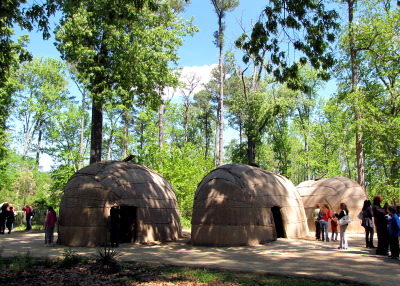
Part of the site includes a re-creation of a Powhatan Indian village.


Artisans create tribal objects based on ancestral technologies. This young man was making a twine bag from natural fibers. The day we went, we also saw a woman making bone tools and another woman making necklaces from local shells. This part of the tour made me think of my friends from Twin Eagles Wilderness School.


The English fort is also re-created.


Artisans also re-create old English technologies, including blacksmiths, gunsmiths, gardeners, and this cook who allowed children to sample English recipes.
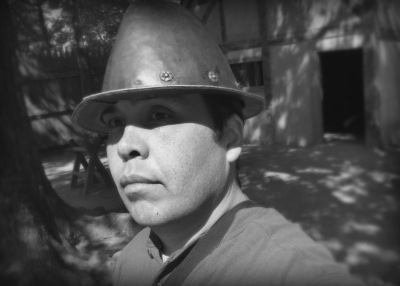

In the old English fort, I tried on a metal helmet that was typical of the Jamestown era. I immediately felt nauseated when I placed it on my head, though I'm not sure if my physical reaction was a result of the heaviness of the helmet or the history of military conquest associated with it.


Replicas of the English ships.


The Union Jack...


Virginia is a place of great natural beauty.


Away from the re-created sites, visitors can also see an archaeological site where the actual fort once stood. The site also includes several statues and monuments.


A statue of Pocahontas.


A statue of John Smith.


English graves along the James River.

Throughout Jamestown, one scarcely gets the impression that the arrival of the English was anything less than noble and heroic. When other ethnic groups are mentioned, they give the impression that the English, Powhatan Indians, and African slaves all somehow collaborated to create a new society. The truth is less inspirational.

On the plane ride home, I had the opportunity to read a biography of Pocahontas written by Helen Rountree, told largely from an Indian perspective. Through her writing, we discover the depravity of the English settlers in Virginia. Unlike the whitewashed myths we often learn in school, we see that the English literally went from village to village demanding food at gun point and eventually killing Indians who dared to object. For anyone who wants a more realistic history of early Virginia, I recommend the Rountree book.

Thursday, April 12, 2012

USS Wisconsin


The USS Wisconsin is docked just a couple blocks away from the conference center. It previously served the United States in a variety of armed conflicts around the world, including the first Gulf War, but now it sits in the Norfolk harbor as a museum.

During one of my breaks, I walked down the street to take some pictures. 

On a whim, I decided to ask about the price of admission. The attendant noticed my conference badge and said, "Are you a teacher?" When I presented my teacher identification, the man said, "As an educator, you get a substantial discount." He handed me the receipt with a total amount of $0.00 marked on the bottom line. I was shocked. Then he said, "Sir, you're a teacher. Always remember to ask about a discount."

Actually, we also got a 50% teacher discount at Williamsburg.


Years ago, my good friend served on the USS Wisconsin during the first Gulf War.

He told me a story that has always stayed with me. Leading up to the war, they sailed to the Persian Gulf, but once they arrived, they spent several weeks at sea just waiting. The crewmen went crazy with boredom. When they finally got the order and fired the cannons at Saddam's forces, the sailors broke into applause and cheers. In contrast, my friend felt strange to think that his buddies were cheering while others were dying on the other side of their bombs.


For me, it felt strange to stand on the same deck as my friend from all those years ago.


The USS Wisconsin is quite an impressive vessel - well worth the time to visit.

Virginia Beach


After the last session ended yesterday, we were sent away to get dinner on our own. I really needed some alone time to re-group my thoughts, so I took a short drive down the road to Virginia Beach. It's a beautiful place, but very commercialized - high-rise condominiums, hotels, restaurants, and tourist shops crowd into a an endless, narrow stretch of ocean-front land. Even so, I appreciated some time near the water to re-energize my spirits.

Tuesday, April 10, 2012

Williamsburg


Pamm and I visited Colonial Williamsburg this afternoon. The day was perfect; seventy degrees and a beautiful clear sky.


Musicians outside the Colonial Capitol.


A woman prepares traditional English medicine in an apothecary.


A woman prepares authentic food in the Governor's Palace.


Duke of Gloucester Street.

Buttercups


For the last several years, I have maintained a tradition of photographing the first buttercups of the season; however, this yea I forgot. Almost every green space in Williamsburg is covered with buttercups.

Independence


The Declaration of Independence was read from the balcony of the Capitol and the king's government was replaced by the will of the people.


Williamsburg residents dress in clothing from the colonial times.

The Crown


The British Crown holds a strong influence throughout Colonial Williamsburg. When we arrived, we first visited the Governor's Palace. The colonial governors were noblemen appointed by the king to represent His Majesty's interests in Virginia.  


The gate of the Governor's Palace bears the symbol of the king's crown.


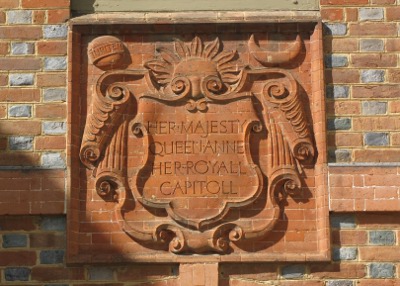
Even the Capitol bear's the inscription, "Her Majesty Queen Anne. Her Royal Capitoll."


A lion adorns a sculpted rendition of the coat of arms belonging to King Geoge III.

It's strange to think that America was once subject to the British Crown, and even stranger to think that we might have remained so today had the king responded to the greivances raised by the colonies.

Edmund Pendleton


Before I left Spokane, Rhonda's mother told me, "When you go to Williamsburg, look for my ancestor Edmund Pendleton." I nodded somewhat absent-mindedly, but I honestly had no expectation of finding one individual within so great an area.


But then I visited the parish church at Colonial Williamsburg, and noticed that each of the box seats surrounding the pews bore the name of the householder who once sat there. To my amazement, the first name I noticed was Edmund Pendleton. The people pictured above are sitting in Edmund Pendleton's box!

Later, I found the pews belonging to George Washington, Thomas Jefferson, and Patrick Henry.


A few moments later, I went back to the pew to get another photograph. As I focused my camera, I stepped backward onto a tombstone embedded into the floor. I looked down toward my feet and was startled to see that I was standing on the grave of my children's ancestor Edmund Pendleton! 

I went outside, plucked a small flower from a nearby tree, and returned to leave it as an offering on the grave.

LinkWithin

Related Posts with Thumbnails