Showing posts with label Native Americans. Show all posts

Wednesday, April 01, 2015

Homestead


After lunch, my mother, daughter, and I visited the old Moses Homestead. It was wonderful for me to show my daughter where my great grandparents once lived. When we arrived, my mother remembered that my dad brought her to this same location many years ago. 

Después del almuerzo, my mamá, mi hija, y yo visitamos la vieja hacienda Moisés. Fue also maravillosa para mí poder mostrarle a mi hija el lugar donde vivían mis bisabuelos. Cuando llegamos, mi mamá recordó que mi papá la llevó a este mismo sitio hace muchos años atrás.  


We were caught in a wind storm mixed with hail and snow. When it started to thunder, I told them that we had better leave. 

Nos tocó una tormenta de viento mezclada con granizo y nieve. Cuando empezó a tronar, les dije que sería mejor que fuéramos de allí. 

Monday, January 26, 2015

Ingrid


Ingrid is my former student at Whitworth University where she took a class that I teach in Native American Film. She is a Kaqchikel Maya woman from Sololá. Guatema with a passionate drive to defend indigenous rights. She always added a fiery, insightful perspective into our class discussions. Last year, she took a job in Guatemala at Cultural Survival to support indigenous radio. She was in town this week for a brief visit. 

Ingrid era mi estudiante en la Universidad de Whitworth donde tomaba una clase que enseño sobre las Películas de Nativos Americanos. Ella es una mujer Kaqchikel Maya de Sololá, Guatemala con un deseo apasionado de defender los derechos indígenas. Siempre añade una perspectiva intensa y profunda a las discusiones en clase. El año pasado, aceptó un trabajo con Cultural Survival (Sobrevivencia Cultural) para apoyar la radio indígena. Está de visita esta semana.  


Ingrid's boyfriend is Stephen, my friend who made an appearance in a previous blog post. He recently visited Ingrid in Guatemala. He sent me a gift that was beautifully wrapped in a newspaper with a Gallo beer ad. I seriously love the wrapping paper. 

El novio de Ingrid se llama Esteban. El es un amigo mío que apareció en una entrada pasada de mi blog. Recientemente le visitó a Ingrid en Guatemala. Me envió un regalo bellamente envuelto en un anuncio de periódico para la cerveza Gallo. En serio me encanta el papel de regalo que me envió. 


The gift was an Indian mask. 
Thank you Stephen. 
I love it!

El regalo fue una máscara indígena. 
Gracias Esteban. 
¡Me encanta!


A screen shot from the Cultural Survival website shows Ingrid and other indigenous people marching in defense of sacred lands. I truly admire her strength of spirit. 

Una captura de pantalla de la página web de Cultural Survival muestra Ingrid y otra gente indígena que marchan en defensa de las tierras sagradas. Sinceramente admiro la fuerza de su espíritu. 

Wednesday, January 14, 2015

Kiowa Church Hymn


This church hymn was performed in the Kiowa language. I am not sure if the orthography is current or correct, but this was how it was written in the booklet that accompanied the album. It says: 

äh’ho dawk’yäee, dawk’yä täom gyă, gyă oboidaw.


According to the composer, the song translates as:

Thank you Son of God. God's help is real. 

Tuesday, January 13, 2015

Kiowa Hymns


Sometimes people give me the most unusual gifts. I was sitting in my classroom today when an acquaintance unexpectedly gave me a vinyl record from 1972 titled Oklahoma Chants for the Classroom, compiled by Louis W. Ballard. I wasn't quite sure how to respond, so I simply thanked the individual and accepted the gift. 

My daughter got a record player for Christmas, so I had an easy way to play the record. As it turns out, the album was an instructional recording for school children. After each song, a narrator gave additional information about each tribal culture represented on the record. He also provided translations and musical transcriptions for every song. Ballard was a Cherokee-Quapaw composer with a passion for Native American music. The music seemed authentic, even if the presentation was somewhat outdated.  

The Kiowa Church Hymn impressed me as it proclaimed in the Kiowa language: 
Thank you Son of God. God's help is real.
As I listed to the record, I found myself singing along and remembering our visit to St. Louis last summer. We met some of our long lost relatives for the first time and discovered that they have a strong Kiowa connection. Now we are all connected as family.  


Saturday, December 06, 2014

Salish Dolls


Annette made some beautiful "Salish dolls" that she sold today at Northern Quest. Rhonda and I went out to see them and happened to see Shelly buying one of the dolls. 

Annette prepared some information about the dolls: 

These dolls' dresses are made of brain-tanned, smoked buckskin. They are embellished with parfleches, cedar baskets, and woven baskets. The plants, rocks, moss, and wood are all native to the Spokane Indian Reservation. The Salish women of the Great Northwest of the United States are hardworking, loyal, loving, care-giving, strong spirited, and compassionate to all people, animals, and Mother Earth.

Annette is an inspiration to me. 


Each doll is hand-made and unique.
They each have been given a name.  


Annette and Shelly. 


The details of each doll are intricate and beautiful. 

Saturday, November 22, 2014

Stan


During my visit to the Kalispel Reservation yesterday, I had the good fortune to interview tribal elder Stan Bluff. He spoke about the cultural values that have guided his life from his childhood to the present day. What an honor to sit in his presence and learn from his experiences!

Thursday, November 20, 2014

Scalp Dance


In my dream last night, I traveled back in time to witness a scalp dance, like the one depicted by Paul Kane in 1847 (see above). In my dream, a recently widowed woman wailed and danced in the center of a group of other women from the community. They all sang, danced, and cried together. As the intensity increased, several of the women swooned and fell to the ground. I never saw a scalp, but somehow I knew it was a scalp dance. In any case, the feeling in the air was charged with raw, visceral emotion.

Clearly, I witnessed something powerful, but I didn't understand my relationship to the event. I finally asked my dream guide, "Why are you showing me this?"

He didn't answer. Instead, he waved his hand, and the scalp dance faded away into nothing. More than a hundred years passed in the blink of an eye, and suddenly we were standing in the exact same location, but then we saw the site as it appears in the present day. Where once there was a field, pine trees grew in abundance. A dirt logging road passed over part of the old ceremony grounds, and several HUD houses stood within a half mile of the old dance site.

Based on the landmarks in my dream, I got the impression that the scalp dance occurred near the present-day location of Elijah Road on the Spokane Reservation. 

Monday, November 03, 2014

The Funeral


The community gathered recently on the Kalispel Indian Reservation to remember the life of my auntie Libby. It was a service made beautiful by traditional clothing, singing, and prayers. Many of the women wore wing dresses and colorful head scarves, while the men wore ribbon shirts. A chorus of Salish speakers sang the old Indian hymns - just as I remember from my childhood - and elders delivered prayers in the Kalispel language. The sadness was real, but the love was also real. I can't imagine a better way for my aunt to begin her journey to the other side. 


A temporary marker on Libby's grave. 


Flowers.


The cemetery. 


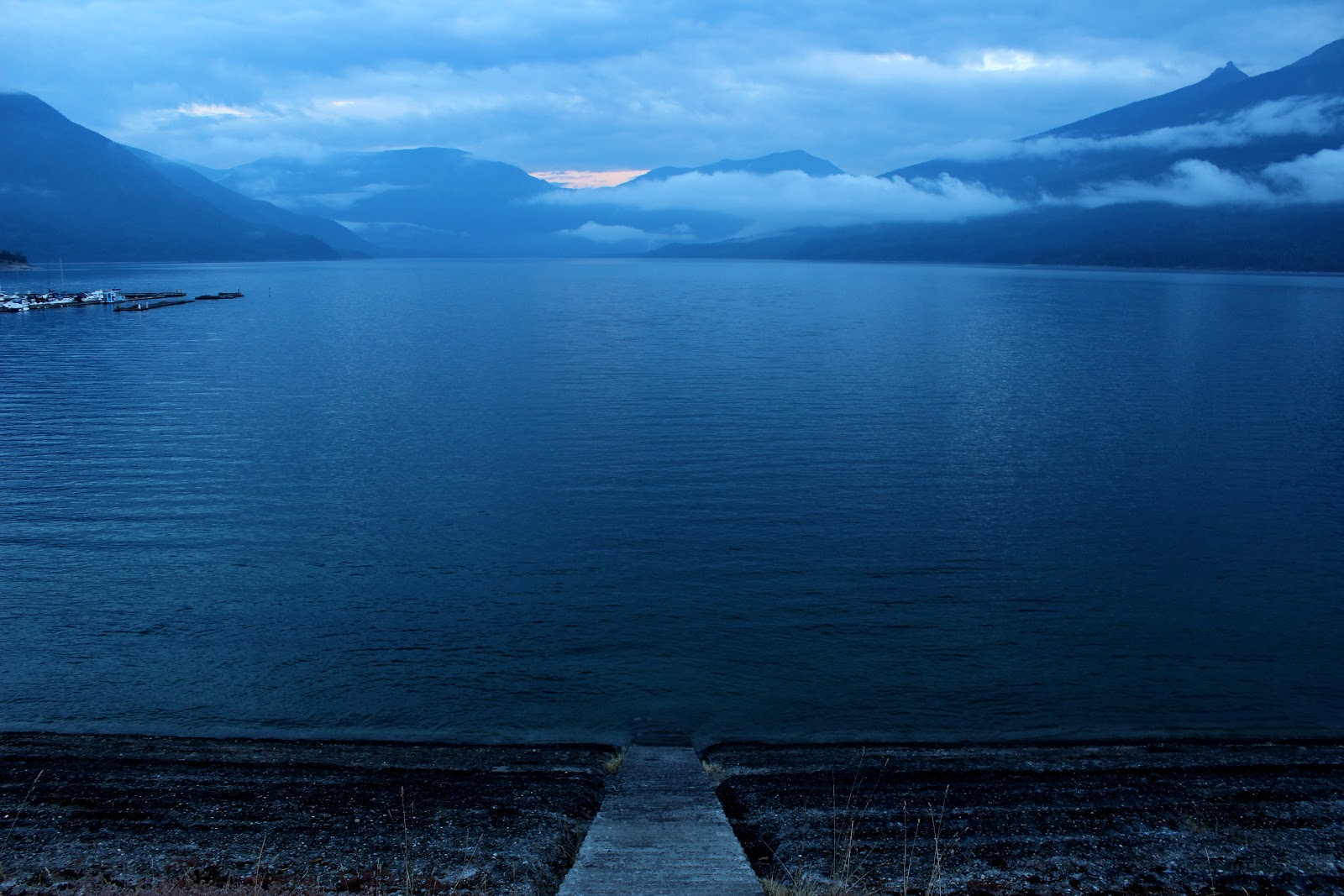
A view of the Pend Oreille River on our return drive. 


More scenery from the drive home...


Wednesday, October 29, 2014

Aboriginal Visit


Spokane Falls Community College is hosting a student group from Sydney, Australia. The students represent a variety of aboriginal peoples from around the country. 

On Monday, I was invited to meet with the students to discuss Native American history in the Spokane area. As the discussion progressed, we discovered many similarities regarding our common history of oppression. For example, more than 100,000 Indian children in the United States were removed from their homes and sent to live in residential schools. In Australia, several generations of aboriginal children were removed from their families and sent to orphanages. These children were known as the "stolen generation." The common purpose of both governments was to force indigenous peoples to assimilate into the dominant cultures. 

More importantly, we discovered our common spiritualities. Our respective cultures hold a deep respect for culture, language, nature, spirituality, and ancestral wisdom. I feel very much at home with these beautiful people. 


Dixie spoke to the students at SCC regarding the "stolen generation." Many of these individuals were descendants of the stolen generation. Many aboriginal people have lost contact with their families of origin as a direct result of government assimilation policies. A major theme of their visit surrounds their attempt to reconnect to their lost heritage. 


Albert has been a driver and cultural guide for the Australian students. At their presentation today at SCC, he sang a local song using an Australian musical instrument.  


We also had the opportunity to visit Spokane Falls. In this photograph, Christine is standing near the main falls. 


Grace. 


It was a beautiful day at Riverfront Park when we visited the falls. 


The rapids above Spokane Falls. 


Dixie.


Chico. 


Barbara. 


Maryanne.


Peta.


Colin looked on as Albert sang by the falls. 

Saturday, October 25, 2014

sumix


This afternoon, I drove home through Tum Tum and Suncrest. As I passed the pictographs at the base of the hill, I felt the urge to stop. I've probably seen these rock paintings a hundred times, but I always feel drawn to return. 

Years ago, the parks department posted a sign with the name sumix near the entrance of the site. Presumably, the name had some reference to the spiritual nature of the rock paintings. However, it was strange that they used a Colville-Okanagan word rather than a Spokane word, considering that the paintings reside well within Spokane territory. In the Colville-Okanagan language, sumix means something like "spirit power." We have a similar word in the Spokane language: sumeš. It makes me wonder who originally created the name. Did a park ranger from 50 years ago simply pick a name that seemed "Indian"? Did someone consult a Colville-Okanagan speaker to name a Spokane historical site? In short, how did a cultural site within the Spokane territory get a Colville-Okanagan name? Does anyone know the story? 

In any case, the sign has since been removed. 

Friday, October 24, 2014

Johnny


What an awesome day! I got to spend several hours with Johnny Arlee this afternoon talking about language, spirituality, and education. Maybe sometime I'll get to share more of our conversation, but for now, I just want to express my gratitude for our meeting today. lemlmtš čoleʔ.

Monday, October 13, 2014

Indigenous People's Day


The Native American Student Organization (NASO) at Spokane Community College sponsored a cultural event in honor of Indigenous People's Day, joining a growing number of jurisdictions around the country that have ditched Columbus Day in favor of celebrating indigenous peoples. Both Seattle and Minneapolis made the change this year. 

NASO posted this image around campus to advertise an Indigenous People's Day observance. 


Shonto Pete sang hand drum songs in the student center in honor of indigenous peoples. Both students and staff paused to listen, and many applauded after each song. For me, it was wonderful to hear the sound of traditional songs resonating throughout the school. 

Thank you NASO and Shonto for organizing this event and raising public awareness. 


A detailed view of the poster shows a rejection of Columbus. 


A view of the entire poster. 

Friday, September 26, 2014

Marie's Dictionary


Marie's Dictionary from Go Project Films on Vimeo.

An inspiring video about Marie Wilcox, the last fluent speaker of the Wukchumni language.

Arrow Lakes News


Several weeks ago, I re-posted an article from the Valley Voice, a small newspaper in British Columbia, where the author reported a multi-faith prayer vigil for the health of the Columbia River. The same event was also reported by the Arrow Lakes News in Nakusp. 


The Arrow Lakes News article, written by Ryan Willman, stated in part: 

On the banks of the Arrow Lakes reservoir a solicitous group gathered and listened to Barry Moses, a member of the Spokane Tribe, describe a dream that he had as a young man. In the dream, the world was barren and dry, devoid of life; then suddenly the earth shook and a gush of water was released from the rocks forming a new river. Moses stood on the banks and watched the river flow until he noticed fish leaping through the waves. He jumped in and followed the fish in the upriver journey until they all reached a beautiful, fertile land. Paradise. 

“This is what I pray for today,” Moses sums up, “I pray for the return of the salmon and the restoration of the river.” 

Moses shared his vision, a prayer and a song with a group of gathered community members who attended a vigil to raise awareness about the plight of the Columbia River. This vigil was part of a series of multi-faith events that began August 6 in Washington and continued every day up the river ending with the last vigil scheduled at the source of the Columbia, Canal Flats. 


The article continued:

Shelly Boyd, member of the Confederated Tribes of the Colville Reservation, spoke of her connection to the Arrow Lakes area and expressed the need for unity and cooperation. “This side of the line, that side of the line. The water doesn’t even know there is a line,” she expressed. Boyd contributed to the vigil with a prayer and sang a traveling song in her native tongue.

Saturday, September 06, 2014

Bad Fog


Years ago, Martin Louie took my father as a son. As a result, we usually called him Grandpa Martin, but sometimes we affectionately called him “The Old Man across the River.” Martin was an elder and spiritual leader who lived at Inchelium, near the western shore of the Columbia River. He was a colorful character, often remembered for his wisdom and humor.

From time to time, Grandpa Martin shared the most profound sayings. Recently, I found a partial transcript of his stories. The following paragraph contains an excerpt. He said:

inxaʔcin, isx̌ax̌paʔ, inqaqnaʔ, istəmtima, ink'ík'waʔ, kʷu c'q'misəlx, kʷu nc'q'mnitkʷsəlx iʔ k̓əl saʔtitkʷ, məł kʷu cusəlx, ‘lut aksk'əłʔitxm i təmxʷulaʔxʷ. k'əłʔitxməntxʷ iʔ tmxʷulaʔxʷ, məł yaʕyaʕt way' suxʷxʷ iʔ skəkʕakaʔ iʔ kəl wist. yaʕyaʔt way nłxʷtl'ilx, mi kʷ xʷt'i…lx, məł iʔ skəkʔakaʔ wikənts t'i kʷ xʷʔu…l ixiʔ t astk'síc'aʔ.’

In English:

My ancestors, my paternal grandfather and grandmother, my maternal grandfather and grandmother, they threw me out of bed, they threw me into the river, and they said to me, ‘Don’t sleep while the world goes by. If you sleep while the world goes by, all the birds will leave and go to the mountains. They will be gone into the bushes before you wake up, and the birds will see you as a bad fog surrounding your body.’

This was a story I had never heard before. In particular, the words ‘bad fog’ caught my eye as an enigmatic or mysterious phrase. I wondered about the meaning, so I decided to ask sʕamtic'aʔ – one of our fluent speakers of the Okanagan language.  


She said, “xʷʔul is like steam that might come up from a boiling pot, but it’s also like what people say nowadays when they talk about an aura – it’s your energy.” In that exact moment, a two-year old boy bounded into the room and pounded a drum with a stick. sʕamtic'aʔ pointed to him and said, “x̌ast i sxʷʔuls. His power is good.”

*

Notes:

The Salish text from: i‿ƛ'ax̌əx̌ƛ'x̌aptət i‿scm'iʔm'ay's.

The photograph from: The Grand Coulee: Savior For Whites, Disaster For Indians by Blaine Harden (http://aliciapatterson.org/stories/grand-coulee-savior-whites-disaster-indians). 

The Salish text in this post is not 100% correct. The blog font prevents an accurate writing of the font. For a correct version, click here. 

Wednesday, August 20, 2014

Ceremony


Our visit to Nauvoo was a wonderful experience, but it was occasionally lonely for me. The people were wonderful, but I missed my own culture and spirituality. 

Toward the end of the pageant, Daniel - a Native man from Kansas - drove six hours to see the show and connect with members of the cast. He was in the pageant himself several years ago, so he knew many of the same people. I am not sure how he found out about me, but he heard there was another Native in the cast, so he tracked me down, and we had a great visit. 

Out of the blue, he said that he brought a hand drum and that he wanted to sing. So the two of us went into the Grove - the same grove where Joseph Smith once preached some of his most important sermons - and sang from our respective traditions. It was an amazing, impromptu ceremony that totally lifted my heart. By the end, any heaviness or loneliness simply fell away. 

I'm still grateful to Daniel for helping me that afternoon. 

Monday, August 11, 2014

Quashquema


Whenever I travel to the eastern United States, I wonder about the indigenous cultures that once flourished in those lands. The history of oppression and Indian removal changed the cultural landscape in the United States, especially in the east. In many places, indigenous peoples exist as a lamentable footnote to European settlement, if they exist at all. In other cases, cultural remnants exist in place names like Illinois or Mississippi, but without the tribal context that once created those names. Most often, indigenous cultures were simply scrubbed from the collective memory of the nation. 

During our visit to Nauvoo, I searched for some evidence or  remnant of culture that was indigenous to that area. Of all the many museums, exhibits, cultural re-enactments, and historical markers, I only found one place that mentioned the original inhabitants of that area. A sign on the south side of town mentioned the Sauk and Fox name of that place: Quashquema. Unfortunately, the sign faces away from the highway, so people are unlikely to discover the indigenous history of Nauvoo. An internet search showed some disagreement regarding the interpretation of Quashquema. One website said the name was a reference to a chief named Quashquema, or Jumping Fish. Another website claimed the name was interpreted as "Peaceful Place."    

In any case, I would love to see a revival of indigenous cultures in the east. 

Wednesday, July 09, 2014

Ashnola


Part of the time, I got to stay at the language house on the Ashnola Indian Reserve of the Lower Smilkameen. It's kind of a lonesome place - quiet and deserted - but that's part of its appeal. Without the distractions of the city, the place seems to come alive with the gentle blowing of wind through the sage brush - beautiful in a haunting kind of way. 


I loved the rattlesnake sign written in the language. 

LinkWithin

Related Posts with Thumbnails