Showing posts with label Mormonism. Show all posts

Wednesday, August 20, 2014

Cousins


The organizers of the Nauvoo Pageant prepared a "cousin finder" using the LDS genealogical services. If you entered your family tree, the computer would prepare a report showing everyone else in the cast who was related. Supposedly, I was related to the majority of the cast, but most of them were like 12th cousins 7 times removed, through dubious or unproved connections. 

On the other hand, Rhonda was 4th cousins with a member of our district, and her connection is solidly proven through their common ancestor James Holt. Now that I think of it, they almost look alike. 

Holt was an early Mormon convert who settled in Nauvoo and later served a mission for the church in Tennessee. Through miraculous means, he learned of the prophet's death on the same day, even though he was hundreds of miles away. When the saints traveled west, he settled in southern Utah. Rhonda's grandmother gave us a typed copy of his diary. 

Reunion


While in Nauvoo, I had an unexpected mission reunion with Elder Clark and the former Hermana Bragg. They approached me during the country fair, and we later had a chance to talk at the end of the show. It was a delightful surprise - wonderful!  

Monday, August 11, 2014

Temple Symbolism


The Nauvoo Temple was finished in 1846, but later destroyed by an arsonist. The remaining stones were toppled by a tornado. The temple was re-built in 2002 with the same exterior design. I will not attempt to explain the symbolism here; rather, this post will include links to another blog that does an excellent job explaining the meaning behind the architecture. 


The temple included "moonstones."


"Sunstones..."


And "starstones..."


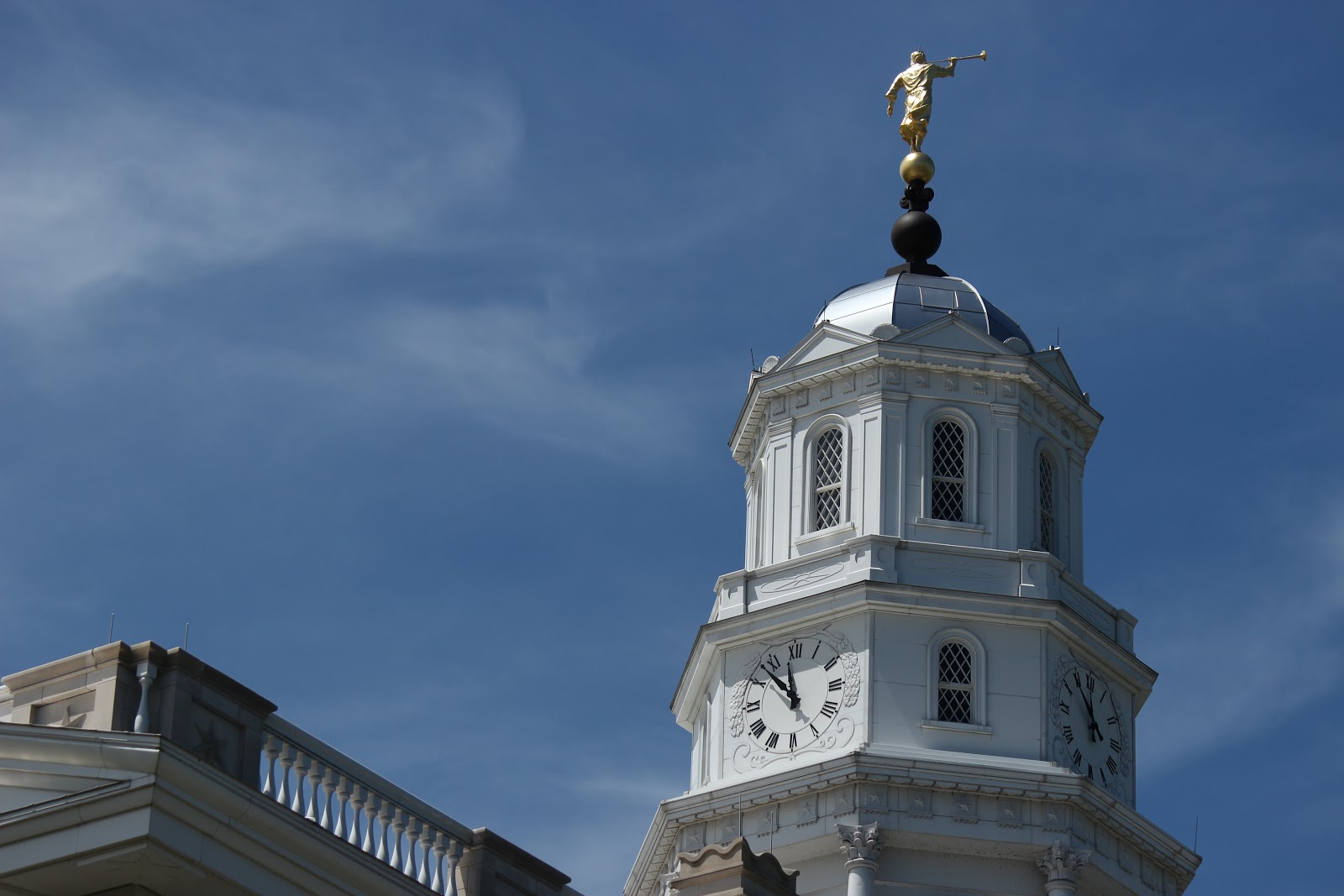
The tower once had an angel weather vane, but the re-designed temple replaced the weather vane with a classic Angel Moroni statue. 


The five-pointed star was said to represent Venus: the Morning Star. 


The outer gates. 


Joseph and Hyrum Smith were said to have paused 
near the temple before surrendering to arrest in Carthage. 

Friday, August 08, 2014

Carthage


On our first Sunday in Nauvoo, our family made the short drive to Carthage, Illinois. For my non-Mormon audience, this is where the Prophet Joseph Smith and his brother Hyrum were assassinated in 1844. Today the jail is preserved as a visitor's center for the LDS Church. 

Visitors begin the tour with a short film that highlights the life of Joseph Smith. Then they tour the restored jail, including the room where the Smiths were killed. 

The church works hard to preserve a reverent, sacred environment for telling the Joseph Smith story; however, the day we visited, multiple busloads of tourists also arrived. Hundreds of people stood in the hot sun and waited for their turn to tour the jail. Families jockeyed into position to pose for photographs below the infamous window where Joseph fell to his death. Once inside the jail, still others elbowed their way to the front. Finally, in the Martyrdom Room, a mother yelled at her kids to get out of the way so she could photograph the infamous window. For me, the crowds distracted somewhat from the spirit of that place. 


Once inside the jail, we visited the dungeon cell - still preserved with bars and stone walls. Joseph and Hyrum stayed only briefly inside the cell. It was so hot that day, that the jailer allowed them to stay in an upstairs bedroom while they waited for trial. 


The tour culminates in a visit to the Martyrdom Room. While Joseph and his party waited, a mob of several hundred men stormed the jail, ascended the steps to the second story, and opened fire on the bedroom door. One bullet penetrated the door and struck Hyrum Smith in the face. 


Joseph Smith ran to the window, perhaps intending to jump, but the mob shot him in the back from inside the bedroom. Some of the mob also shot him from the ground below. Smith fell head-first from the second story window and died. 

To the tourists and visitors, this window assumed an almost mythical status. Most everyone spoke in hushed tones, except for the mother yelling at her kids to get away from the window. But in fairness to that mom, the tour guides did rush us out of the room to make space for the next tour group. This may have been her last chance to photograph a cherished family memory. Besides, after she got her children to move, she also gave me a clear view of the window. 


Of course, I was also one of those obnoxious tourists who forced my son to pose below the window. I have to be fair with everyone. 


Sometimes I hesitate to write about spiritual experiences, especially if they might appear different than the norm, but I want to say something about my own spiritual reaction to Carthage. 

As mentioned, the crowds distracted somewhat from the reverent atmosphere. In addition, some of the tour guides seemed to overwork the emotion of Joseph's death. But I wanted to experience the spirit of Carthage Jail on my own terms - independent of the correlated church curriculum or popular expectations. 

In all the different parts of the tour, I stopped, closed my eyes, and checked my feelings. To be honest, most of the tour seemed blank. From time to time, I felt the weight of history and the grief of the early saints, but I was looking for something I couldn't name.  

Finally, I stood on  the exact location where Joseph Smith fell to his death. Whatever opinions people may have regarding Joseph or the religion he established, no one can argue that he started a movement that now touches the whole world. Most everyone has been affected - in big and small ways - by what happened in Carthage and Nauvoo. So I stood on that spot and closed my eyes. It's difficult to describe, but I felt an electrical current emanating from a place just beneath the cobblestones. It flowed upwards, toward the sky. This may sound a strange, but it felt like I was standing in a stream of energy. I have no idea what it means, but all the hairs on my neck and arms stood on end. 

Music Rehearsals


The first day and a half of Nauvoo Pageant rehearsals took place in the air-conditioned comfort of the Nauvoo-Colusa High School (or was it the junior high?). We practiced the songs, even though the chorus of entire Nauvoo Pageant plays on a pre-recorded track. Some of the dance rehearsals also took place in the school - as well as all the meals - but we practiced on stage as quickly as possible. 


Monday, August 04, 2014

Sunday


Our first Sunday in Nauvoo, we attended one of the local wards. Sacrament meeting should have held two or three hundred people, but the influx of Mormon tourists increased the attendance to well over a thousand people. In a way, Nauvoo is like a pilgrimage destination where the faithful go to experience the early history of the church. 

After the meeting, we walked to the temple. 

Rhonda's brother and his family were performing in the Nauvoo Pageant the week before us. We usually only get to see them once a year or once every other year. But since our casts overlapped, we got to see them more often. It was nice to see familiar faces in such a faraway land. The picture above shows Dakota with his uncle and cousin. 


The original temple was built in 1846, but was soon destroyed by arsonists. The remaining walls were later toppled by a tornado. The church rebuilt the temple in 2002. 


Whitney took some quiet moments 
to meditate on the temple steps. 


Stylized "sun stones" stand atop each pilaster of the temple. 


Dakota and McKenna.

Catholic Nauvoo


During our first full day in Nauvoo, I was surprised by the religious diversity of the town. Mormonism tends to dominate public awareness, but Nauvoo actually has a rich history of other faith traditions. In particular, I was impressed by the red-brick Catholic Church towering over the same hill as the Mormon temple. These are pictures you won't likely see in official publications, but it's important to seek other perspectives. Sometimes unexpected or unconventional stories paint a fuller picture of people and their communities. 


A statue of Jesus faces Wells Street.  


The Sacred Heart of Jesus. 


"No Parking: Except for Funerals and Church." 

I love this sign. 

Monday, February 03, 2014

The Kirtland Temple


On Friday morning, I had only barely recovered from a withering bout of bronchitis, when I boarded a plane for Cleveland, Ohio. My friends invited me to attend a cultural gathering that included people from the Anishanaabe, Cree, and other tribes. 

Ironically, a major portion of the gathering happened just a few miles down the road from the Kirtland Temple.  

The Kirtland Temple was the first such structure built by Joseph Smith and the Latter-Day Saint movement. The early Mormon saints carved the temple from the wilderness in the early 1830's when that portion of the state was still relatively wild and heavily wooded. Despite their own poverty, they sacrificed their material comfort to build a suitable house of worship. The temple was dedicated in 1836 amid an outpouring of spiritual manifestations.   


This was also a place of spiritual irony. Scarcely a generation before the Mormons took refuge in Kirtland, the Native American tribes of the Ohio region were devastated by the invasion of land-hungry settlers. Ohio became a state in 1803, but a few scattered survivors remained until the Indian Removal Act of 1830. The decline of Indian civilizations overlapped with the rise of Mormonism and the American frontier. 


Kirtland also represents a mystical, charismatic version of Mormonism from a bygone era. The early saints embraced a revolutionary faith that challenged conventional orthodoxies and dared to suggest that ordinary people had access to the divine through direct, personal experience. On the day of the temple dedication, people reported seeing angels walking on the rooftop. Some heard the sound of a rushing wind, while others spoke in tongues. The most faithful even reported seeing Jesus standing in bodily form on the breastwork of the pulpit. This was a youthful, exuberant faith, still untouched by the bureaucracy that would eventually transform the modern church into an institution defined in part by its uniformity and doctrinal conservatism.  


How strange to think that the people and events of Kirtland began a movement that changed the world, a movement that would eventually affect my family, my children, and my community. 


Finally, this last photograph is actually my favorite of all the ones I took that day. Unlike the idealized, picture-perfect renditions of the temple from official church publications, this photograph shows the temple in its natural setting - crowded by asphalt, the cacophony of passing cars, and a tangle of electrical wires. Here the ineffable and the mundane exist side by side, each one touching the other. 

Sunday, December 01, 2013

Homeless


This story has already made the rounds on Facebook, but I was inspired to hear the voice of the Mormon bishop who dressed up as a homeless man in order to share a lesson in compassion. He acknowledged that some people asked him to leave the church, but I especially appreciated his last comments when he said that anyone might respond in a similar way. Sometimes we all need reminders in non-judgment and compassion. 

Wednesday, July 24, 2013

My Turn On Earth


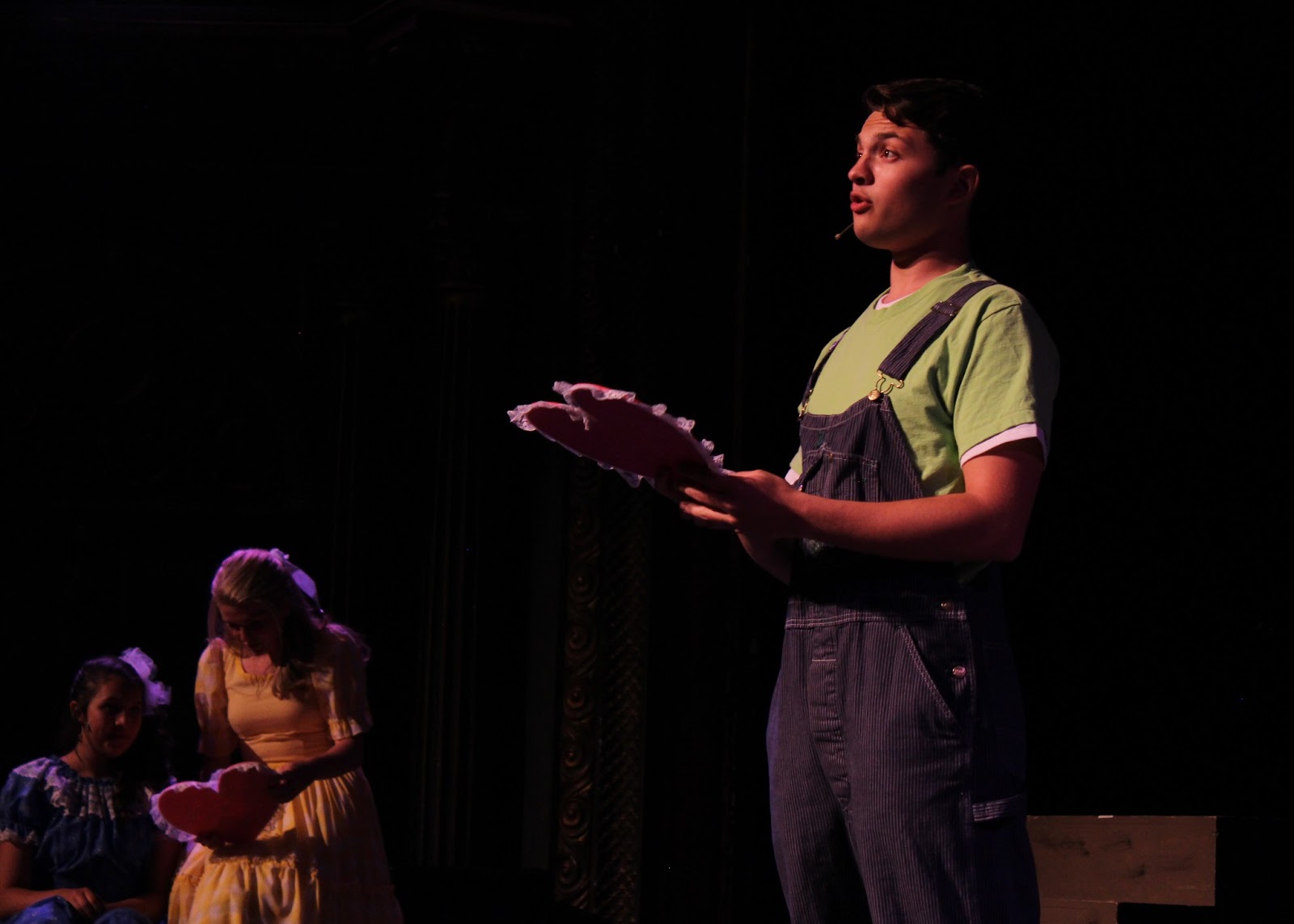
My Turn On Earth was a phenomenal success! More than five hundred people packed the Bing Crosby Theater and enjoyed a wonderful show. More importantly, people were energized and inspired by the upbeat, positive message. 


The whole cast on stage. 


Barbara...


Charles...


The whole cast in the scene "My Story."


Dakota as "Charles"


Brother and sister in the same show. 


Whitney as "Gloria"


Tanner as "John"


Sierra as "Barbara"


Paige as "Pam"


McKenna dropped notes from the dome. 


Jacob stepped in as an impromptu stage manager. 


My Turn On Earth lit up on the marquee. 

LinkWithin

Related Posts with Thumbnails