Showing posts with label Religion. Show all posts

Thursday, July 09, 2015

Friday, May 15, 2015

Peace Panel Poster


I suppose I should have blogged the poster before the event. 

Interfaith Peace Panel


The Buddhist Club at Eastern Washington University organized an interfaith peace panel with representatives from Buddhism, Islam, Christianity, and indigenous spirituality. My friend Geshe Phelgye moderated the panel and invited me to participate. As always, it feels overwhelming to speak in a public forum where people might misunderstand my heart. I can only speak for myself, and not for anyone else in my communities. 

The panelists were amazing. Every one of them impacted me in a positive way. I took notes and hopefully quoted each panelist as accurately as possible. 

We watched a video before the event where Desmond Tutu was praising the current Dalai Lama. He said, “There is no way in which injustice, oppression, and evil can have the last word.”

Later, as Geshe-La introduced the panel, he said, “Prayer alone is not enough... Along with prayer, we need to engage with others to promote peace" and “Peace only happens when we communicate.”

Imam Yasser Shahin began his presentation by reciting part of the Quran. He said, “In the name of Allah, the most merciful, the most compassionate.” I have heard this phrase before, but in light of our discussion, I appreciated the reminder that God is both merciful and compassionate. 

He said that saying hello to people will spread harmony more than keeping to oneself. “Peace starts with knowledge.” He encouraged the people to study other cultures and religions. He also said, “If you know that drawing the Prophet Mohammad offends many people, then you should stop drawing the Prophet Mohammad” and “It’s okay to debate, but we should refrain from arguing.”

The Reverend Happy Watkins told a touching story about meeting his mother in a bus. In front of all the people, she placed her hand upon him and prayed for the Lord to watch over her son. He said, “My mother had no idea what the future held, but she prayed to the future-holder.” His words reminded me of my own struggle after suffering a stroke. Likewise, I have no idea what the future holds for me. Lots of people make predictions and give advice, but only the Creator knows what my future will be. 

He also said, “We have conquered the air and land, but we are not yet wise enough to displace war and hate” and “There’s hope for this Universe of the God we serve.”

Rev. Watkins spoke about the three institutions that give hope for our future: 1) The Institution of the Family, 2) The Institution of the Home, and 3) The Institution of the Kitchen Table.

Lama Lakshay said, “To hurt is not very pleasant.” He told a story about hurting a baby yak, and as a result of that hurt, the yak no longer trusted him.

Pastor Shelley Wee told a story about a young boy from her childhood who was kind of an outcast from the others. He was disliked and teased. Once day, he was singing, "Jesus loves me this I know, for the Bible tells me so." She recalled thinking, "I wish you wouldn't do that. People will only treat you worse."

Much later, she realized that the boy was part of her group in every way. He attended the same school. He came from the same racial background and the same socioeconomic class. He even attended the same church. She wondered how she could ever come to love people who were different, when she struggled so much with someone who was the same. I really appreciated the vulnerability and emotional honesty of her question. 


After each panelist spoke, the audience got the chance to ask questions. Unfortunately, I didn't feel that the event allowed enough time to truly answer each question. For example, one man asked how our faith traditions could improve in promoting peace among the LGBT community. One or two people attempted a response, but I sensed something lacking.

This is not a critique of Geshe-La. My only hope is that we can continue to engage in courageous conversations in the future around these difficult topics. 


Geshel-La, Imam Yasser Shahin, Rev. Happy Watkins, Lama Laskey Zangpo, Pastor Shelley Wee, and I. 


Lama Laskey, Pastor Shelley, and I conversed briefly after the event. 

Monday, August 04, 2014

Catholic Nauvoo


During our first full day in Nauvoo, I was surprised by the religious diversity of the town. Mormonism tends to dominate public awareness, but Nauvoo actually has a rich history of other faith traditions. In particular, I was impressed by the red-brick Catholic Church towering over the same hill as the Mormon temple. These are pictures you won't likely see in official publications, but it's important to seek other perspectives. Sometimes unexpected or unconventional stories paint a fuller picture of people and their communities. 


A statue of Jesus faces Wells Street.  


The Sacred Heart of Jesus. 


"No Parking: Except for Funerals and Church." 

I love this sign. 

Monday, February 03, 2014

The Kirtland Temple


On Friday morning, I had only barely recovered from a withering bout of bronchitis, when I boarded a plane for Cleveland, Ohio. My friends invited me to attend a cultural gathering that included people from the Anishanaabe, Cree, and other tribes. 

Ironically, a major portion of the gathering happened just a few miles down the road from the Kirtland Temple.  

The Kirtland Temple was the first such structure built by Joseph Smith and the Latter-Day Saint movement. The early Mormon saints carved the temple from the wilderness in the early 1830's when that portion of the state was still relatively wild and heavily wooded. Despite their own poverty, they sacrificed their material comfort to build a suitable house of worship. The temple was dedicated in 1836 amid an outpouring of spiritual manifestations.   


This was also a place of spiritual irony. Scarcely a generation before the Mormons took refuge in Kirtland, the Native American tribes of the Ohio region were devastated by the invasion of land-hungry settlers. Ohio became a state in 1803, but a few scattered survivors remained until the Indian Removal Act of 1830. The decline of Indian civilizations overlapped with the rise of Mormonism and the American frontier. 


Kirtland also represents a mystical, charismatic version of Mormonism from a bygone era. The early saints embraced a revolutionary faith that challenged conventional orthodoxies and dared to suggest that ordinary people had access to the divine through direct, personal experience. On the day of the temple dedication, people reported seeing angels walking on the rooftop. Some heard the sound of a rushing wind, while others spoke in tongues. The most faithful even reported seeing Jesus standing in bodily form on the breastwork of the pulpit. This was a youthful, exuberant faith, still untouched by the bureaucracy that would eventually transform the modern church into an institution defined in part by its uniformity and doctrinal conservatism.  


How strange to think that the people and events of Kirtland began a movement that changed the world, a movement that would eventually affect my family, my children, and my community. 


Finally, this last photograph is actually my favorite of all the ones I took that day. Unlike the idealized, picture-perfect renditions of the temple from official church publications, this photograph shows the temple in its natural setting - crowded by asphalt, the cacophony of passing cars, and a tangle of electrical wires. Here the ineffable and the mundane exist side by side, each one touching the other. 

Sunday, December 01, 2013

Romero


Recent conversations have reminded me that Monseñor Oscar Romero of El Salvador spoke powerfully against the agents of genocide. He used his office to denounce the murder of his fellow countrymen, and he himself paid the ultimate price. A gunman assassinated Romero in 1980 while he celebrated mass. 

The day before his murder, Romero delivered the following sermon:

I would like to appeal in a special way to the enlisted men of the army, and in particular, to the ranks of the National Guard, and the police—those in the barracks.

Brothers, you are of part of our own people. You kill your own campesino brothers and sisters. Before an order to kill that a man may give, God’s law must prevail that says: “Thou shalt not kill!” No soldier is obligated to obey an order against the law of God. No one has to fulfill an immoral law. It is time to recover your consciences and to obey your consciences rather than the order of sin. The Church, defender of the rights of God, of the law of God, of human dignity, of the person, cannot remain silent before so much abomination. We want the government to understand seriously that reforms are worth nothing if they are stained with so much blood.

In the name of God, and in the name of this suffering people, whose laments rise to heaven each day more tumultuous, I beg you, I beseech you, I order you in the name of God: Stop the repression! 
The Church preaches its liberation just as we have studied it today in the Holy Bible – a liberation that includes above all, respect for the human person, the salvation of the people’s common good, and transcendence, which looks before all to God, and from God alone derives its hope and its force. We are going to proclaim today our creed in this truth

The video in this post contains Romero's original speech in Spanish, along with archival photographs of the genocide in El Salvador. 

Romero's clarity and courage are deeply inspiring to me.  

Monday, November 25, 2013

A Thousand Buddhas


My daughter and I also visited the Garden of a Thousand Buddhas near Arlee, Montana. It was a beautiful sunny day when we arrived, which only added to the magnificence of seeing hundreds of white Buddha statues lined one after the other. 

During our visit, my daughter asked the golden question: "What is Buddhism?" I told her the story of Siddartha Gautama and how he found enlightenment. I am not Buddhist, but I admire the Buddha and his philosophy of compassion and non-attachment. I especially appreciate the opportunity to experience different religions and cultures with my children. 


The garden is shaped like a wheel with spokes radiating from a center point. The outer perimeter was lined with tiny stupas, each with its own miniature Buddha inside. 


The center point is a golden statue of the Buddha sitting under a cover. 


A golden Buddha. 


The "spokes" of the wheel emanating from the center. 


Does anyone know what this says? 


Prayer flag mark the entrance to the garden. 


Offerings outside the garden. 


A small place for offerings. Well, I don't actually know if this structure was intended for offerings, but people are using it in that way. 

Monday, September 16, 2013

Salish Archive


As part of my doctoral research at Gonzaga University, I was able to see a number of old Salish documents held in the special collections archive. For example, I was able to see an original "Kalispel Dictionary" published by Father Giorda in 1870. The book was still bound in its original deerskin cover. Other documents were handwritten in Latin and Salish. 

The document pictured here is a sample of "Our First Communion," written by Reverend Kelly. The original book was written in English, but handwritten Salish notes follow the text. I will post one other sample tomorrow. 

(These samples were posted under the terms of "fair use" and do not constitute an attempt to reproduce the entire text).  


o jesus, qe k'Ê·ul'ncutn
Oh Jesus, our Creator.


Saint Ignatius of Loyola. 


I included the stature as part of the 'faces' 
depicted the other day. 

Sunday, July 07, 2013

Doubt and Faith


Lesley Hazleton is an agnostic Jew who wrote The First Muslim: The Story of Muhammad. In this TED video, she spoke about Islam and the Prophet in a way that defies the simplistic east-versus-west narrative that so frequently dominates the media-driven public discourse. From my perspective, I was especially moved by the way she challenged the idea that faith is the banishment of doubt. Rather, doubt is essential to faith. She also challenged fundamentalism in all its varieties and ultimately strengthened my faith in the the future of humanity. 

Hazleton articulated a concept that has been brewing in my mind for several years. For anyone who has ever wrestled with these questions, this video deserves to be watched in its entirety. 

Saturday, July 06, 2013

Latter-day Sentinel


The Latter-day Sentinel, an online newsletter for Spokane area Mormons, published a feature article on Edward Dakota's production of My Turn On Earth. The full article can be accessed by clicking on the photograph above, or by clicking here

Tickets are still available by calling (509) 599-5572. 

Those who prefer to pay by credit or debit card, may now visit Dakota's mission fundraiser blog and click on the Paypal "Donate" button. His blog: 

Wednesday, June 05, 2013

Slough-Keetcha


Spokane Garry at Fort Colville in 1860. 
Spokane Garry’s Indian name was lost to memory until an old letter recently re-emerged after almost 200 years in obscurity. Documentary evidence now confirms that Garry’s original Salish name was Slough-Keetcha. The story of his name is the subject of this blog post.

In 1825, Governor George Simpson of the Hudson Bay Company directed Alexander Ross to recruit two Indian boys from the Columbia River country to be educated at the Red River settlement in Canada. At the first suggestion, tribal leaders resisted the idea of sending their children to an unknown fate, but Ross eventually prevailed upon them to accept his proposal. Two of the chiefs, Illim-Spokanee (ilmixÊ·m sp’q’niÊ”) of the Middle Spokane (snxÊ·meneÊ”), along with a Kootenai war chief, selected their own sons. During a public ceremony, one of the chiefs made an emotional plea. He said, “We have given you our hearts—our children are our hearts; but bring them back to us before they become white men—we wish to see them once more Indians” (Ross, 1855, p. 157).

If the old men wished to see their sons “once more Indians,” they must have sensed the looming change that would befall their children as they traveled to a foreign land. As if to hasten their assimilation, Governor Simpson immediately renamed the boys. “The son of the Spokane chief was now named Spokane Garry, after his tribe, and Garry, one of the directors of the Hudson Bay Company; while the son of the Kootenai chief was named Kootenai Pelly, after his tribe, and Governor Pelly” (Lewis, 1917, p. 39).

Tragically, Kootenai Pelly died a few short years later, but as Garry later returned to the land of his parents with a new language and a newfound faith in Christianity, his original name faded from memory. Since then, historians have remained silent regarding Garry’s childhood name, or have simply accepted that it was “lost to time” (Kershner, 2008). In fact, it would seem that once he returned from the Red River country, Garry favored his English name over the name of his youth. For the Spokane, Garry was the first of many who would change their names to accommodate the encroaching culture of the whites.

Garry’s original name remained a mystery until the digital age finally created greater access to a number of old historical documents. 

The Reverend David T. Jones, a Welsh missionary at the Red River school, kept a diary of the religious instruction he provided to the Indian people, including Spokane Garry. In 1828, he recorded that one of the Indian boys from the Columbia River tribes wrote a letter to his parents. He transcribed the letter in the Missionary Register:

My Dear Father and Mother — I am very glad that I can write to you, and that I can tell you that I am well. I have never been sick since I came to this place; and I have always had food to eat and clothes to put on. I can now read much of that book that the Great Spirit has given to the White People, to tell them what they must do, so that when they die they may go to the good country. This book tells us that there is a time coming, when Indians, as well as White Men, shall know what the Great Spirit has said in this book, and what they ought to do to please Him. I wish, my Dear Father and Mother, that you, my Sisters and Brothers, and all my Country-people, knew these things. Give my love to my Uncle Chongulloosoon, and to all my Aunts; and I would thank you to send me a deer-skin. The great Illemechum whom you saw before, takes this Letter. Be good to the White People, for they are good to us. This from your Son, Slough-Keetcha (Church Missionary Society, 1829, p. 576). 


A handwritten transcript of Garry's letter. 

The transcript did not explicitly state that Spokane Garry wrote this letter; however, two important clues suggest that he did. First, the letter was written in 1828 at a time when only two Columbia River children were present at the school: Spokane Garry and Kutenai Pelly. Second, the author of the letter referred to Governor Simpson as the “great Illemechum,” a word with a striking similarity to the Salish expression ilmixÊ·m, meaning “chief.” If this letter was indeed written by Garry, his childhood name has finally been restored.


Brian Huseland, a teacher at Northwest Christian Schools, recently connected Garry with the Indian name from the letter by examining a microfilm of the original documents. The letter cited above was a type-written copy that appeared in an official missionary publication; however, a handwritten transcript of the same letter contains additional information, including Garry’s name. The handwritten version included a brief explanatory statement that read: “Our two Indian Boys sent letters to their friends by Governor Simpson, one of them Spokain Garry wrote as follows of his own accord” (Section V: Missions to the Americas, Part 2: North West Canada, 1821-1880, Reel 48). This statement was followed by an identical letter that was also signed by Slough-Keetcha. According to the handwritten journal, Spokane Garry and Slough-Keetcha were one and the same!


Slough-Keetcha's name appeared at the bottom of the page.
Examining the film at the Spokane Public Library.
Photo Credit: Brian Huseland

In all fairness, credit also belongs to Douglas McMurry. In 2011, he published an historical novel of Garry’s life, The Forgotten Awakening: How the Second Great Awakening Spread West of the Rockies. McMurry’s book also mentioned Garry’s tribal name, presumably by accessing the same documentary source. The semi-fictional history recounted the moment Illim-Spokanee gave his son to Alexander Ross. “Turning to Ross and staring him in the eye, he added, ‘As for me, I give you my son Slough-Keetcha. He is the joy of my life. He is my youngest. He is in your care’” (McMurry, 2011, p. 128).


During his lifetime, Garry was often a conflicted man, caught between the forces of assimilation and a desire to preserve the integrity of his own country. In his old age, he suffered injury, poverty, and defeat, but perhaps in death, some measure of dignity is restored through the memory of his tribal name. Perhaps through the restoration of his name, Slough-Keetcha returns to his people once again Indian. 


References:

Church Missionary Society. (1829). Missionary Register for MDCCCXXIX (Vol. 17). London: L.B. Seely & Sons.

Kershner, J. (2008, August 1). Chief Spokane Garry . Retrieved from Historylink.org: http://historylink.org/index.cfm?DisplayPage=output.cfm&file_id=8713

Lewis, W. S. (1917). The case of Spokane Garry. Fairfield, Washington: Ye Galleon Press.

McMurry, D. (2011). The forgotten awakening: How the Second Great Awakening spread west of the Rockies. Sisters, Oregon: Deep River Books.

Ross, A. (1855). The fur hunters of the far west: A narrative of adventures in the Oregon and Rocky Mountains. London: Smith, Elder & Company.

Section V: Missions to the Americas, Part 2: North West Canada, 1821-1880, Reel 48. (n.d.). Church Missionary Society Archive.

Tuesday, May 14, 2013

Concert


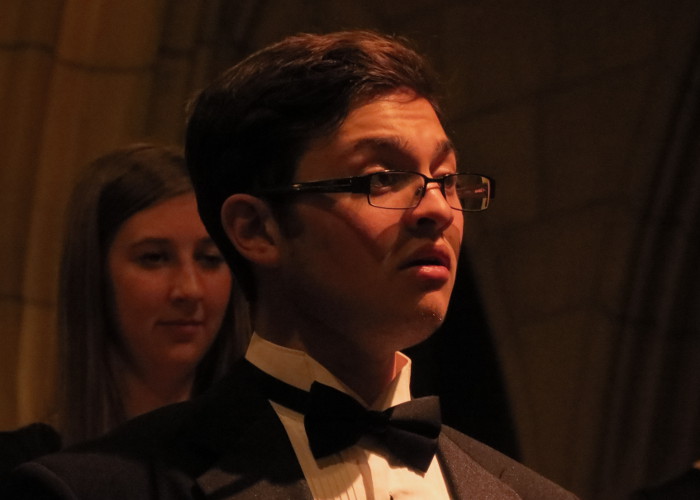
The Mead High School Concert Choir performed an amazing concert at the Cathedral of Saint John the Evangelist. These are some of the pictures from that event. 


Dakota in the nave of the church. 


Dakota singing. 


The west entrance of the church. 


Detail of the west door. 


A scene from the Garry window, 
depicting Chief Garry instructing Governor Stevens. 


Garry instructing the Spokane people. 


The Eternal Father and Mary. 

The Holy Trinity. 


A wood carved pulpit showing Christ. 


Dakota. 

LinkWithin

Related Posts with Thumbnails