Friday, October 22, 2010

Counter Protest


Yesterday, the folks from Westboro Baptist Church staged a handful of hit-and-run protests at college campuses throughout the Spokane area, including Gonzaga, Whitworth, and Eastern Washington. They even protested a high school and a conservative Bible college. The Kansas based church has gained a toxic reputation for it virulent anti-gay rhetoric and its practice of protesting military funerals. According to Westboro Baptist Church, God is punishing America for its tolerance of homosexuality.

Each Westboro protest lasted little more than 30 minutes, but the local community mobilized large counter protests at every scheduled picket site.

Some time between my various meetings and daily appointments, I had the chance to witness the counter protest at Gonzaga University. When I arrived, hundreds of people had already assembled by the main entrance, many holding balloons and handwritten signs. Despite the large numbers, a palpable silence settled over the crowd. The energy of the moment caused an unexpected wave of emotion to rise within me.

A prayer was offered, but my next meeting was about to begin.

As I drove away, I was struck by the power of so few people to create such a huge reaction. Westboro Baptist Church claims only a handful of members, all from one family, and yet their bigotry overshadows an entire nation. It's difficult to understand. I can only imagine that their visit to Spokane reminds me to treat others with dignity and respect, even those who may disagree with my religious or political ideas.

If indeed we identify anyone as an "enemy," then we are reminded that the same Jesus Westboro claims to honor commanded us to "love our enemies."


A sign reads "God loves everyone."


A sit-in on the Gonzaga campus.


"Gonzaga University Day For Justice 2010."


"Love Sees No Color."


"Choosing to Act With Love."


The counter-protest on the Gonzaga campus.

Thursday, October 21, 2010

Meadow


Yesterday my niece gave birth to a beautiful baby girl. She named her Meadow.


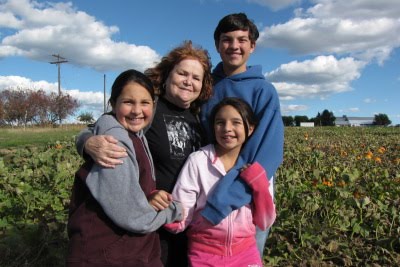
Meadow's aunt and older sisters.


My daughters are old enough to be Meadow's aunts, but I think they are technically first cousins, once removed.


Dakota with baby Meadow.

Wednesday, October 20, 2010

Elderberries


My appreciation for the land continues to grow.

The other day, I picked two and a half gallons of elderberries with my mom and my sister. My intention is to create a cold/flu syrup that my children would be willing to take. We already know a number of effective cold remedies, but my children cannot stand the bitter taste. Hopefully the elderberries will create a more tolerable medicine.


Elderberries have been used for many years as a common folk remedy, but recent scientific tests have confirmed traditional wisdom. While they do not necessarily prevent sickness, elderberry extracts have been shown to shorten the duration of colds and flu.


Some elderberry links worth reading:

Elderberry Benefits

Elderberry Prevents H1N1

Tuesday, October 19, 2010

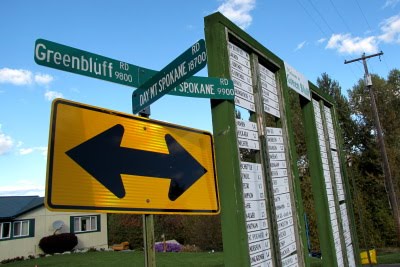
Greenbluff


Last Friday afternoon, my family visited the farms at Greenbluff to pick pumpkins and apples.

I remember visiting Greenbluff as a teenager, but I never went back until last Friday. Now that we've gone, I don't know why I stayed away so long. There's something deeply satisfying about going to the field to pick food from the ground with our own hands, even if we didn't grow it ourselves. In any case, we supported our local farmers while creating a happy memory for our children.


We first visited Knapp's Farm. They had quite a variety of pumpkins, squash, and gourds already picked and ready for purchase.


The farm also had a collection of old cars and tractors. The kids loved taking turns sitting at the driver's seat.


The kids also loved running through the straw bale maze at Knapp's Farm.


Of course, the pumpkins are the main attraction. The kids wandered through the patch looking for the perfect pumpkin to bring home.


A yellow pumpkin flower was still blooming.


The pumpkin flowers are covered with thick hair. I'm actually surprised that Rhonda agreed to wear this hairy flower for the picture.


Grandma Treat with the kids...


Dakota pulled the cart up the hill.


Dakota and grandma sitting on a hay bale.


I got to push the cart up the second part of the hill.


In the end, we bought about 100 pounds worth of pumpkins, some for carving and some for eating. We paid about $30 total. We also bought honey made from bees living on the pumpkin farm.


The sun was shining that day, creating picturesque scenes amid the many orchards, farmhouses, and barns. From now on, we plan to return every year.


After the pumpkins, we picked apples at the Pit Stop Orchard.

Friday, October 15, 2010

I and Thou


Martin Buber (1878-1965) was an Austrian-born Jewish philosopher best known for a concept he described as the "I-Thou" relationship.

According to Buber, most people sadly exemplify the opposite. The "I-It" mentality sees the world as a collection of objects and thus creates a sense of separation and disconnection from the true nature of reality. Furthermore, as our human society becomes more industrialized and complex, we tend to create more objects and thereby exacerbate our collective isolation. This condition sounds remarkably similar to the "wall of grief" described by Jon Young, or the idea of "nature deficit disorder" proposed by Richard Louv. One could argue that the global objectification of both people and nature has driven the planet to its current state of disease.


In contrast, the "I-Thou" relationship is a direct spiritual encounter between living beings. When we encounter that level of connection, our sense of separation ceases to hold any meaning. Labels disappear, differences fade, and judgments surrender to deep love and understanding.

We can never find the "I-Thou" relationship by seeking, just as those who seek a vision can never force the spirits to open the windows of heaven. The best we can do is to make ourselves available to encounter the moments of connection as they happen. We cannot force the wind, but we can quiet our minds enough to appreciate the wind as it passes by. Likewise, the "I-Thou" relationship is an act of grace.

We may seek connections with nature and with one another, but the true moment of spirit-connection is a gift.


Unlike the modern industrial complex, most indigenous peoples embody the "I-Thou" relationship between humans and nature. The natural world is not a thing to be bought or sold. Indigenous societies inhabit a world where animals, plants, and even minerals are people, and where they stand forever in relationship to the spirits of the land.


From the book "I and Thou," Martin Buber says:


I contemplate a tree.

I can accept it as a picture: a rigid pillar in a flood of light, or splashes or green traversed by the gentleness of the blue silver ground.

I can feel it as movement: the flowing veins around the sturdy, striving core, the sucking of the roots, the breathing of the leaves, the infinite commerce with earth and air, and the growing itself in the darkness.

I can assign it to a species and observe it as an instance, with an eye to its construction and its way of life... I can dissolve it into a number, into a pure relation between numbers, and eternalize it.

Throughout all of this the tree remains my object and has its place and its time span, its kind and its condition.

But it can also happen, if will and grace are joined, that as I contemplate the tree I am drawn into a relation, and the tree ceases to be an It. The power of exclusiveness has seized me.

"...Relation is reciprocity."

Thursday, October 14, 2010

Whitefish


This last weekend, I had the opportunity to participate in a unique gathering of people. A diverse group of naturalists, trackers, and wilderness educators came together at the Walking Bear Resort in Whitefish, Montana to explore a collective spiritual question. As my friend Jon Young says, people are beginning to re-connect to nature in meaningful ways, and as a result, they often encounter a "wall of grief."

It is ironic that by encountering the profound spirituality of nature, we also begin to feel the distress of a world living in disconnection from nature. Jon organized the weekend to explore ways of healing the disconnection and grief within ourselves and within our respective communities.


Therapists and practitioners presented ways of moving through grief from a variety of healing traditions. For my part, I had the opportunity to lead a soul dance as one of several healing modalities. We gathered in a large yurt with enough room for 28 dancers.


My friend Tim Corcoran from Twin Eagles Wilderness School addressed the group.


Connecting with both new and old friends was perhaps the most meaningful part of the weekend. Will Scott and James Stark of the Regenerative Design Institute flew into Spokane, so I had the opportunity to share the drive with them. We had an instant connection that I will remember for years to come.


Kathleen and Will.


Richie Booth from the Tracks and Tales Nature School.


Graham, Richie, and Jon.


Tim Ryan is a member of the Confederated Salish and Kootenai Tribes of the Flathead Indian Reservation. He works to restore traditional native skills.

LinkWithin

Related Posts with Thumbnails