Wednesday, May 31, 2006

Drumheller Springs


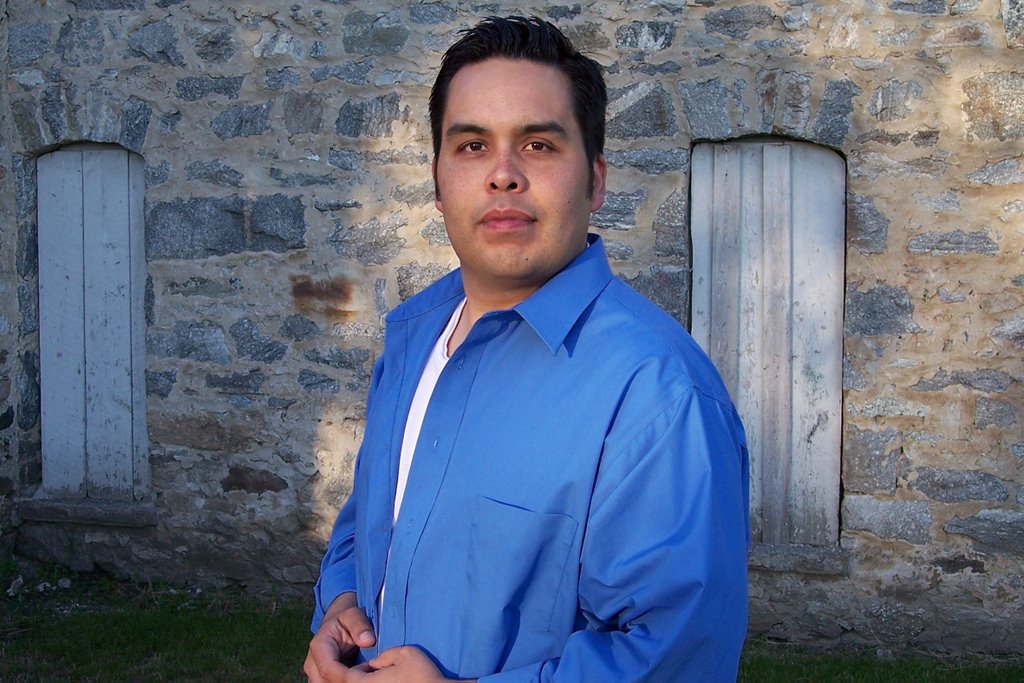
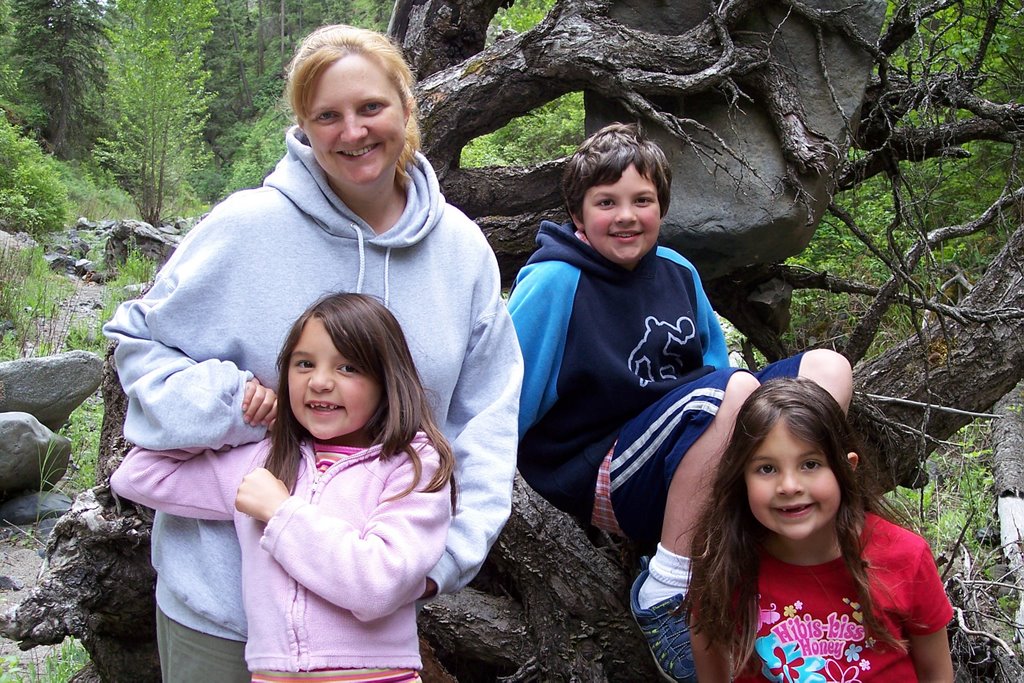
My sister Kim at Drumheller Springs.
Copyright © 2006 Barry G. Moses.


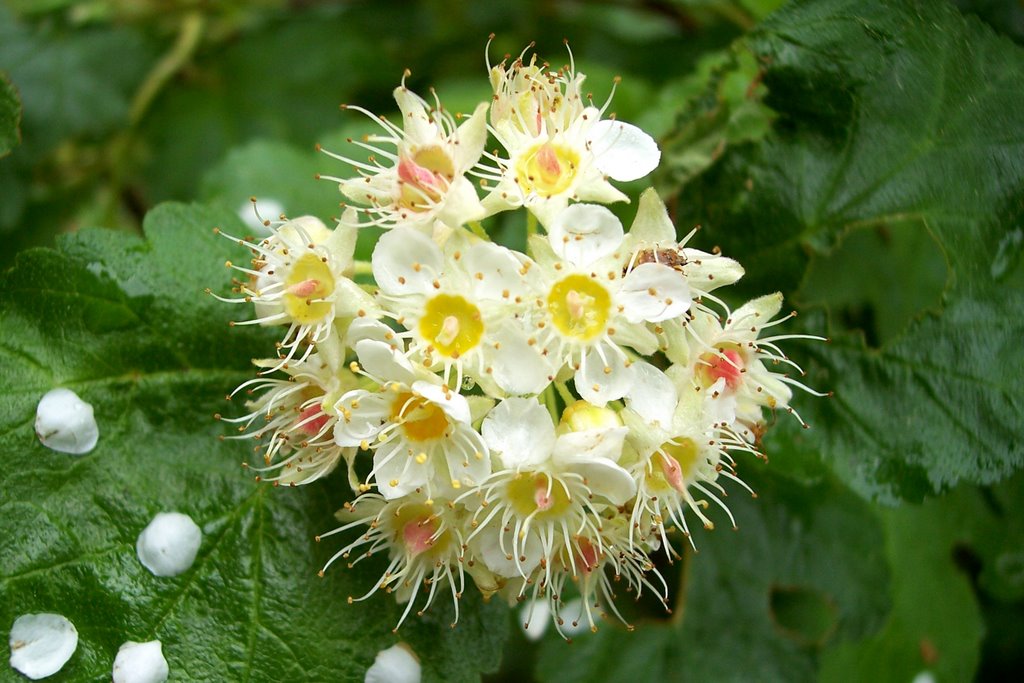
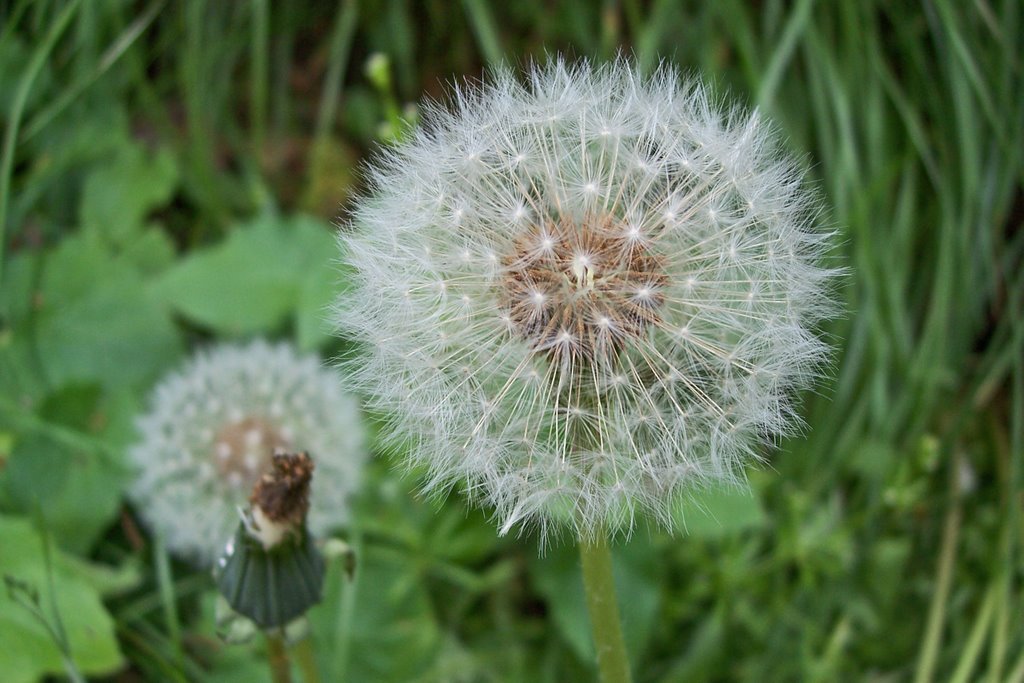
Flowers near Drumheller Springs.
Copyright © 2006 Barry G. Moses.


Several months ago my sister moved into a new house, but I only got around to seeing her new place today. I know, we're all too busy these days.

As it turns out, her new house is just down the road from an ancient cultural site: Drumheller Springs. Of course, the site received its current name less than 200 years ago. Who knows what people called it before? Thousands of years before my Spokane Tribal ancestors made contact with European settlers, travelers camped near the spring to rest from their journey. A major trail extended from Spokane Falls and passed by Drumheller Springs before continuing north all the way past the present-day Canadian border. The site was important enough to host the first western style school built by Spokane Garry after he returned from the Red River School in the 1820s or 30s. In fact, my great aunt once told me the site was still actively used as recently as 1930. She remembered camping there as a little girl. Her family used to ride buck-board wagons from Wellpinit and then camp at the springs before going into town for shopping. She remembered staying in a tepees on the field just above the hill before the Spokane city limits estended that far. If I remember correctly, my high school art teacher once told me her father used to live below the spring and remembered visiting the Indian people camped there.

My sister's family and my family walked to the spring and talked about the historical significance of this place. We had a wonderful visit.

Distractions


The Greek Orthodox Church of Spokane.
Copyright © 2006 Barry G. Moses.


My family drove by the Greek Orthodox Church this afternoon and observed workers installing copper tiles on the roof. It seems before the roof was made of plain grey stucco or concrete; hardly befitting the natural beauty of the towers and walls, but now the copper reflects the sunlight like a beacon and nearly stopped me in the middle of a busy intersection. In fact, I did return by circling around the block and got out to take pictures. Unfortunately, I couldn't seem to find the perfect shot behind all the wires and visual distractions.

Somehow my experience with the church reminded me of my relationship with God in this moment. I see the light reflecting into my life, but when I try to focus on what matters most, I feel distracted by problems, deadines, and discouraging thoughts.

Even so, I refuse to end on a negative note. Perhaps we can take this one lesson: to always appreciate beauty where ever we find it. We can ruin any moment by concentrating on the distractions, and we can find the blessing in the midst of any problem. Every moment contains elements of both positive and negative. Our experience depends on what we choose to notice. I'm thankful for receiving this teaching today.

Monday, May 29, 2006

Minnehaha Park


Rhonda at Minnehaha Park in Spokane.
Copyright © 2006 Barry G. Moses.


Copyright © 2006 Barry G. Moses.

My wife and I took a short hike through Minnehaha Park in Spokane. When I was in high school, I lived just a few blocks away and spent many hours in those hills meditating, praying, and figuring out my place in the world. It was a blessed place for me, even though some people use it for mountain biking, paintballing, or less reputable purposes. I feel happy to visit that place once again and share my experience with Rhonda. We had a wonderful talk about spirituality and answers to prayer.

Forgotten Places


Copyright © 2006 Barry G. Moses.

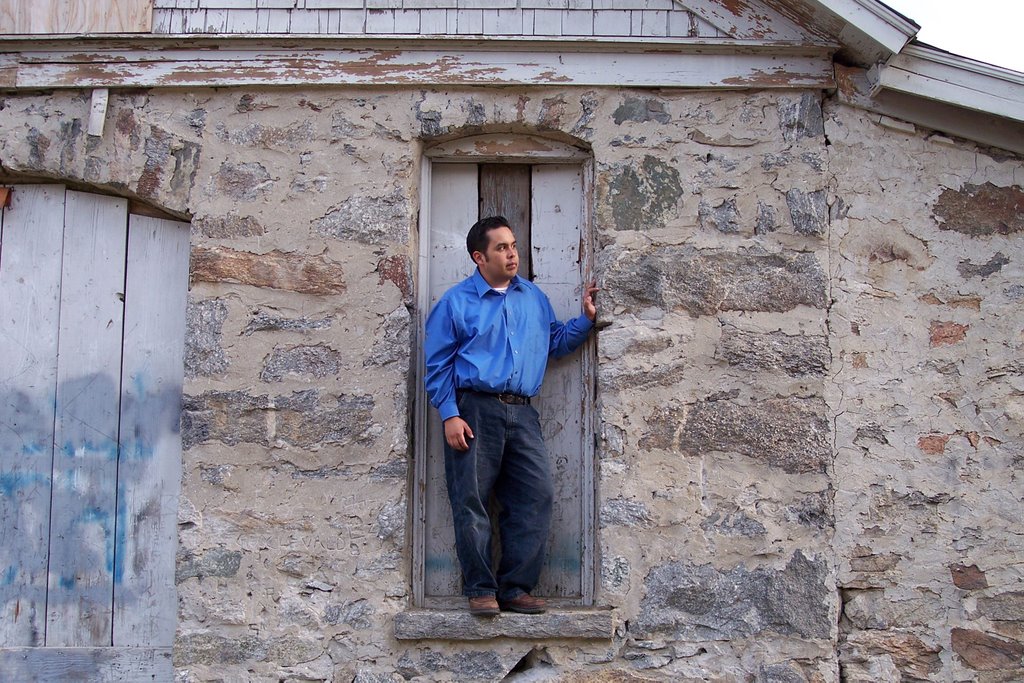
I really like this picture of me standing in a window of the old stone building at Minnehaha Park. Those who've watched my previous posts know I really appreciate old buildings, ruins, and forgotten places.

Upriver Dam


Copyright © 2006 Barry G. Moses.

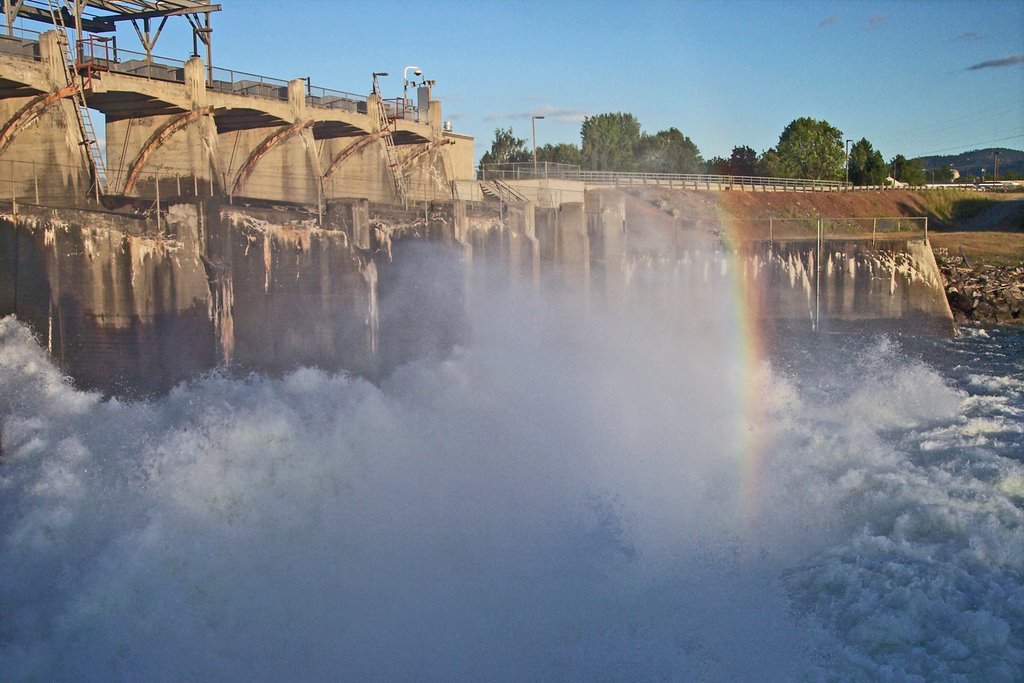
Rhonda and I visited Upriver Dam on the Spokane River and got this amazing photograph of a rainbow over the spillway. When I was in high school, I lived less than a mile from the dam and used to hike along the water and in the surrounding hills. My yaya (great aunt) Messie once told me she remembers camping near the dam site as a little girl. She said the Spokane Tribe used to have a campsite not far from the present-day dam, and her family stayed there before the site fell into disuse in modern times. Isn't that incredible? Our ancestors were living the old ways not so very long ago.

Memorial Day


Copyright © 2006 Barry G. Moses.


Copyright © 2006 Barry G. Moses.

My family visited the cemetery this morning in observance of Memorial Day. We met other family members at the grave sites of Rhonda's brother Steve, and her grandfather James. Afterwards, we enjoyed a wonderful lunch together.

While the family visited by the graves, I took a moment alone to find the graves of my great grandmother Alice Meiers and my great grandfather Donald Olsen.

I remember my great grandmother from my childhood. She had a stroke during the last years of her life and lost use of one of her arms. I remember visiting her when I was very small, and sometimes she would cry for no reason at all and my mother would tell me to give her a kiss, to "cheer her up." When I kissed her she seemed to smile and stop crying. It's a happy memory for me, and even now I feel a wave of emotion as I visit her final resting place.

On the other hand, I never knew my great grandfather. He died when I was a child, but my family had more than a few painful memories associated with him. Some of my relatives speak bitterly of him, but I still honor him every year at his grave. He is after all my great grandfather. I wouldn't be here without him.

Sunday, May 28, 2006

Through the Rain


Copyright © 2006 Barry G. Moses.

Went on a hike this afternoon and got stuck in a huge downpour. I felt wet and cold, but the plants and flowers were alive and vibrant.

Saturday, May 27, 2006

Family Outing at Deep Creek


Copyright © 2006 Barry G. Moses.


Copyright © 2006 Barry G. Moses.

Several weeks ago my sister Michelle introduced me to an awesome hiking trail along the dry riverbed of Deep Creek. I took my wife and kids there this afternoon for a family outing. At first, my children didn't want to go, but when we got there, they were very excited to see all the water-carved rock formations, channels, and caves. We had a delightful time together.

By the way, the creek was mostly drained by farmers upstream, but we found a few remnant pools of water, as pictured above.

Dandelions


Copyright © 2006 Barry G. Moses.

I love this picture, though I hate seeing dandelions in my yard. Persistent little things, aren't they?

Flowers by the Barn


Copyright © 2006 Barry G. Moses.

The other day I was driving home from Colville when I saw these flowers in front of an old barn. I'm not sure how I knew it would be a good picture, but I stopped my car and got the shot. Sure enough, it turned out quite well.

Wednesday, May 24, 2006

The Da Vinci Code


Several days ago, my wife and I saw the controversial film "The Da Vinci Code," based on the novel by Dan Brown. Both the book and the movie are presented as the fictional account of a 2,000 year old cover-up involving the Roman Catholic Church and Opus Dei (an ultra-conservative Catholic sect), resorting to murder as they attempt to conceal evidence of Jesus Christ having been married to Mary Magdalene and fathering a child. The child of Jesus was then supposed to have produced a line a descendants surviving to the present day.

The movies itself was moderately entertaining, but not since the "Last Temptation of Christ" have we seen such a firestorm of righteous indignation.

Novels and films based on fictional theories should hardly produce the kind of reaction "The Da Vinci Code" apparently unleashed on the world, but even before its debut in theatres, Christian churches around the world have been working overtime to expose the "truth," and some even attempted to blacklist the film in certain countries.

Why the visceral response? Why not simply dismiss the film as fantasy and move on?

Maybe some of the protest and furor come from hitting a raw nerve or even a kernal of truth beneath the obvious exxageration. I mean, I seriously doubt Opus Dei sends albino monk/hitmen to protect vital church secrets, but the organization does have a somewhat founded reputation for secrecy, arch-conservatism, and extreme acts of penance. And while nowadays the Roman Catholic Church generally works to stand as a voice for morality and compassion in the world, it's no secret the Church also represents a long history of oppression and bloodshed against Muslims, Jews, Gypsies, women, and homosexuals. Remember the Crusades, the Holy Inquisition, and the supposed witch hunts killing hundreds of thousands, or perhaps even millions of innocent people. I realize Pope John Paul II issued a blanket apology for the sins of the Church back in the year 2,000, but have we as a culture ever really come to grips with why we felt it necessary to murder 500,000 women under the guise of ridding the world of witchcraft? What was so threatening about women?

I have no desire to undermine the faith of millions of people worldwide, and I certainly don't wish to present fiction as something real, but for me "The Da Vinci Code" opens an old wound. When I think of my Native American grandparents who were forcibly converted to Christianity under pain of imprisonment and death, I wonder why so many Christians used the name of Jesus for wrongdoing. Do people really doubt the power of Christ so much they feel obliged to enforce their view of the Bible by the sword? And in modern times, do people doubt the Lord so much they feel it necessary to protest a novel?

Besides, is it really that threatening to believe Jesus may have married and had a family? Wouldn't the idea of a married Jesus actually enhance the case of pro-family Christians? Why can't Jesus be both married and divine?

I believe in God with all my heart. I believe in God's Son. Even so, I feel no need to enforce my views through protest and legislation. I can't help but think those who do so react because of doubt and not faithfulness. Seriously, will the Divine Order of the world collapse if we teach science in public schools and not creationism? Will faith cease to exist in America because we maintain a secular state (and hence freedom of religion)? Will millions of God-fearing families really disintegrate if we allow a small minority of people to practice same-sex marriage? Will God's plan for humanity collapse because of a novel? We see so much emotion around these issues, but for me I go back to the one sign of true discipleship set forth by the Son of God: "By this shall all men know that ye are my disciples, if ye have love one toward another."

It's important to note the test of true discipleship does not rely on legislation, doctrinal orthodoxy, or even moral purity; rather the true followers of Jesus are identified by how powerfully they embody the redeeming love of God. If more Christians actually followed the teachings of Christ and loved their enemies, rather than create new enemies by protesting every time someone disagrees with their theology, the world would be a much better place.

As an aside, I don't believe everyone who attempts to correct misconceptions in the media is a doubting Thomas or a religious bigot. I don't object to the dialogue on either side of these divisive issues, but rather the manner in which people sometimes dehumanize their opponents. I defend the right of people to believe in God or to disbelieve according to the dictates of their own conscience, and I advocate the right of people to disagree with civility regarding fundamental issues of faith and life.


Tuesday, May 23, 2006

Dalagers of Trondheim


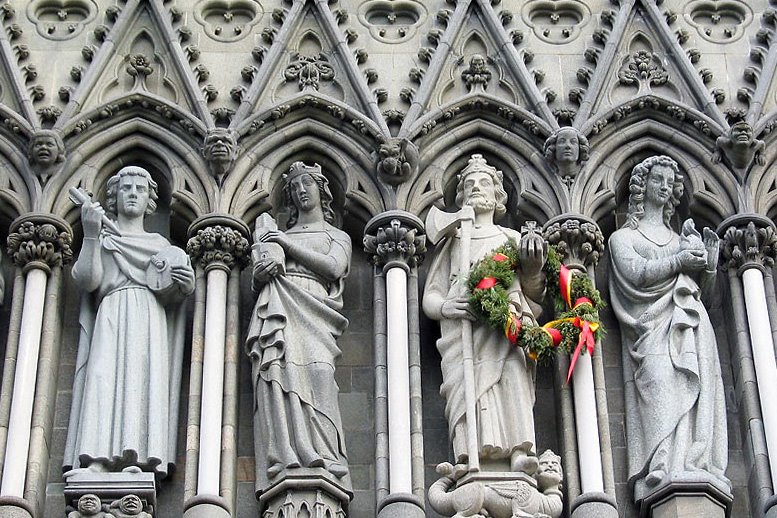
The Outer Wall of Nidaros Cathedral, Trondheim.

I received an email from a distant relative in Norway, Terje Ofstad, regarding our Dalager ancestors. If you recall, I presented evidence that Carolina Dalager was the daughter of Frederik Dalager, who was the son of Mathias Ferslev Dalager. However, Terje presented other evidence to suggest Carolina was the daughter of a different son, Mathias Anton Dalager. I'm not sure what to make of it. Any experienced genealogist knows what it's like to receive conflicting information regarding the ancestors. It's frustrating at times, but also exciting as we attempt to unravel the mysteries of the past.

By the way, Mathias Anton was also an artist, like his father. They lived in Trondheim, Norway, which is a beautiful city in the middle of of the country, and which was once the capital city. Trondheim still houses the Royal Regalia of the Norwegian Monarchy. Someday, I should very much like to visit the city of my ancestors.

Monday, May 22, 2006

My Dalager Ancestry


Icebergs off the coast of Greenland.

Christopher Carl Dalager was born April 8, 1726 at Dragsminde, Rødby, Denmark, the son of Jens Laursen Dalager and Anna Goës. Some time after 1752 he sailed to Grønland as a “pioneer” of the Danish colony. On May 24, 1759 he married an indigenous Grønlander named Juliane Marie at the village of ChristianshÃ¥b. It was very common in those days for indigenous people to receive Christian names from European missionaries. Juliane Marie was most likely named for the Danish queen who ascended the throne in 1752. Her true birth name was probably never recorded and subsequently lost forever.

Christopher and Juliane Marie lived at the village of Sarqaq (later named Saqqaq) on the western shore of Grønland. There she gave birth to a son, Mathias Ferslev Dalager some time in 1769.

Mathias left Grønland in 1789 and studied at the Royal Academy of Arts at Copenhagen. He studied art until 1792 and then returned to the land of his birth. As it turns out, the hunter families of Grønland had little interest in his paintings, so he left once again and became a teacher of art in Trondheim, Norway. He mostly painted scenes of ocean ports and ships. Some of his works are still visible online.

Mathias became the father of many children, including my ancestor. According to some sources, I descend from his son Frederik Dalager; other sources claim I descend from his other son Mathias Anton Dalager. I still seek confirmation of the true father.

One of the Dalager sons fathered my ancestor Carolina Dalager. The generations from Carolina Dalager were:

Iver Olsen
Odin Bernhard Olsen
Donald Engwald Olsen
Alice Elizabeth Olsen
Shelly Marie Nichols
Me.

And that’s the story of my Dalager ancestry.

Sunday, May 21, 2006

Mathias Ferslev Dalager


Christian Church in Saqqaq, Greenland;
Birthplace of Mathias Ferslev Dalager.


I received an email reply from Inger Bjørnaas regarding my family history request. She referred me to a webpage written by Terje Ofstad documenting the genealogy of the Dalager family in Norway. He confirms the relationship between my ancestor Carolina Dalager and the artist Mathias Ferslev Dalager, though he claims her father was not Frederik, as I suspected, but rather another son, Mathias Anton Dalager. I wrote asking for documentation and clarification and now await his response. For the time being, I will regard Carolina as Frederik's daughter, as her name seems to suggest. Regardless of the outcome, it seems more certain than ever that my family descends in part from the indigenous people of Greenland.

Saturday, May 20, 2006

Possible Greenlandic Heritage


Indigenous children from Paamiut (Frederikshaab).
I may have ancestors from Grønland (Greenland).


Several years ago, I corresponded with Inger Bjørnaas, a woman from Meldal, Norway who provided some assistance to me by copying pages from Norwegian church books related to my mother's ancestry. I was grateful for her help, but unfortunately, I was unable to learn anything more about my Norwegian lineage... that is, until yesterday. What I found surprised me.

According to church records transcribed by Inger, one of my ancestors was a woman by the name of Caroline Frederiksdatter Urvandsagen Dalager, born on March 24, 1823. She was the daughter of a certain Captain(?) Dalager of Trondheim and Johanna Lind from Kristiansand; she was also born out of wedlock.

As it happens, I found the birth record of a woman named Johanne Catherine Larsdatter Lind, born on June 12, 1806 at Kristiansand, Vest-Agder, Norway. I also found the birth record of a man named Frederik Dalager, born June 26, 1808 at Trondheim. If these individuals indeed became the parents of my Caroline Frederiksdatter Dalager, Johanne would have been 17 years old at the birth of her daughter, and Frederik would have been 15. While I sincerely doubt Frederik was a sea captain by age 15, he may have become so later. Other clues may establish his identity.

The same Frederik Dalager who was born in 1808 was the son of Mathias Ferslov Dalager and Anna Catharina Svartz. It's even more intriguing to realize Mathias was the first native Greenlander to be trained as an academic painter. His father was Danish and his mother was an Inuit from Paamiut (Frederikshaab), Greenland. Historical records indicate he experienced some conflict between his two cultures and eventually settled in Trondheim. They also indicate he spent time prospecting in Kristiansand and even painted a harbor scene of the village.

I have yet to find conclusive proof of my relationship to Mathias Dalager through his son Frederik, but already a fair amount of documentary evidence seems to suggest a connection. For example, the ages of Frederik and Johanna are very close. Both lived in Trondheim and both spent time in Kristiansand. And even though this Frederik may not have been a ship captain, historical records make note of the Dalager family as ship painters.

If this connection proves valid, I have yet another Native American lineage from a most unlikely source, Greenland (Grønland)!

Of course, I received my primary Native American heritage from my father Edward Moses who was a "full-blood" member of the Spokane Tribe of Indians. The second Native American source I was able to document came from my mother, who is descended from a certain Catoneras, a Long Island Native who married a Dutch immigrant in the 1600s. I would be so happy to document a third Native lineage from the Arctic north. I've dreamed of visiting the Native people of Greenland, so maybe the connection is real.

Wednesday, May 17, 2006

Happy Birthday Dakota!!!


Copyright © 2006 Barry G. Moses.


Copyright © 2006 Barry G. Moses.

Dakota is finally reaching that awkward stage between childhood and adolescence. He still wanted the birthday party with the special plates and toys, but it's not the same. As I look at his birthday pictures, I feel a twinge of emotion because of how old he's getting; he looked like a little man to me. He's certainly not my baby any more. Before we know it, the years will pass away and he'll be an adult.

Monday, May 15, 2006

Project Self-Sufficiency


School busses parked in "downtown" Wellpinit.
Copyright © 2006 Barry G. Moses.


Controls on an abandoned firetruck.
Copyright © 2006 Barry G. Moses.

The Community Colleges of Spokane and Spokane Tribal TANF recently created a collaborative contract for adult learners and hired me to teach a class called Project Self-Sufficiency. I present lessons twice a week to a group ranging from 10 to 16 students. So far, it has been really fun.

I enjoy teaching in Wellpinit because of its proximity to my family and cultural center, but also because I love to see the layers of history everywhere evident. For example, I recently posted several photographs of an abandoned house from the 1930s or 40s. Right behind my work site is an old fire truck from many years ago. Some people would call it junk, but it holds my attention and excites my imagination.

As a history teacher, I see history everywhere. History is not dead, but lives in everyone and everything.

Saturday, May 13, 2006

Whitworth Graduation


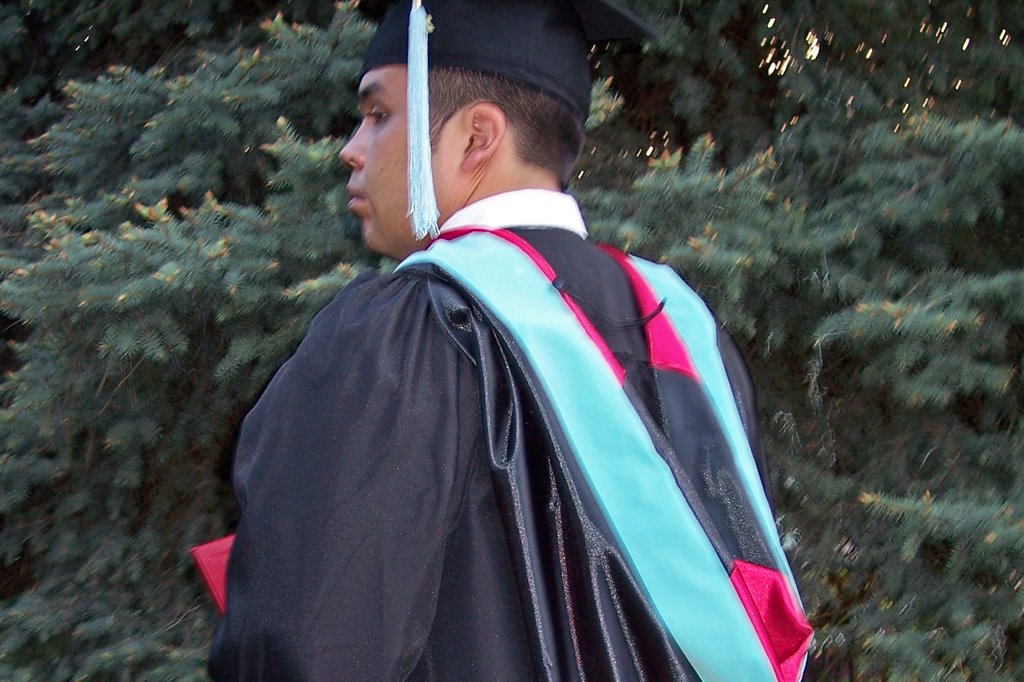
Rhonda and I After Commencement.
Copyright © 2006 Barry G. Moses.


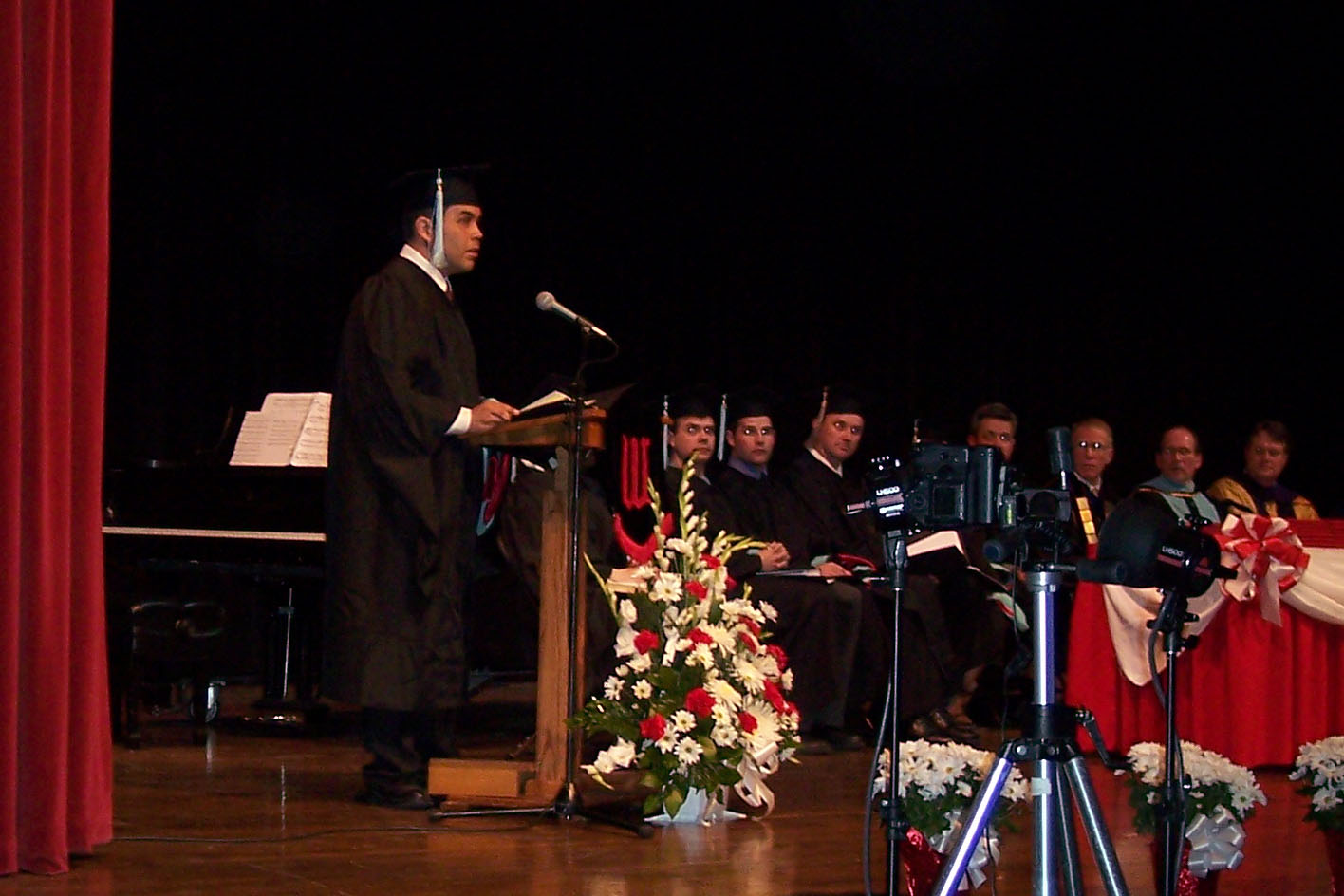
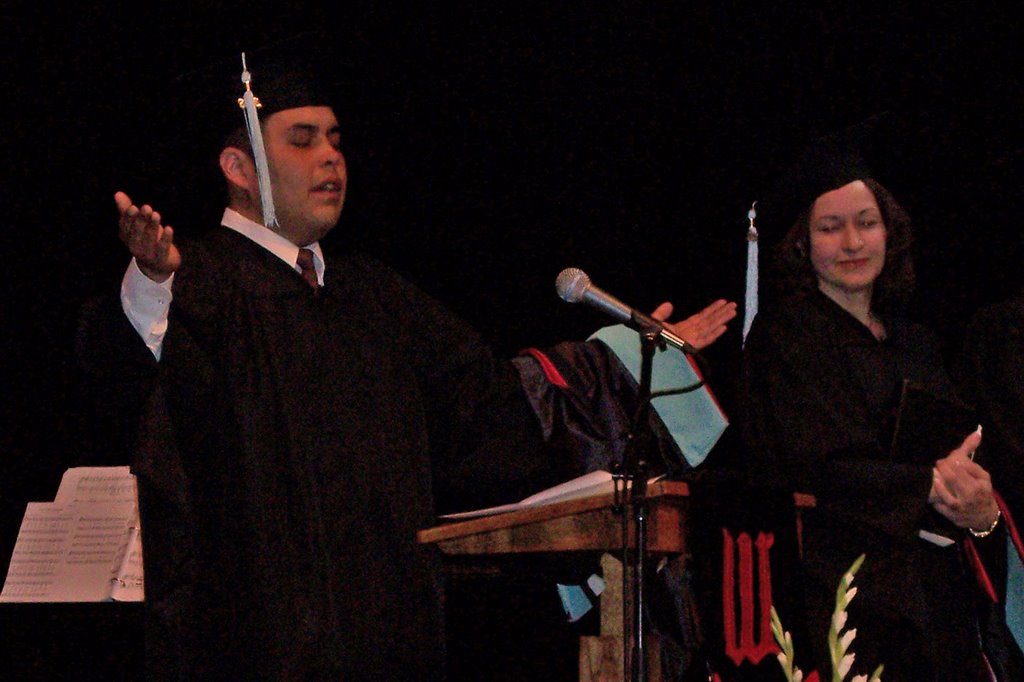
I got to read a verse from the Old Testament.
Copyright © 2006 Barry G. Moses.

Well, I finally made it; I attended my graduation ceremony this morning at Whitworth College, receiving a Master's Degree in Education. It has been a long haul and many times I thought I was going to quit, but by the hand of God and the loving encouragement of my family, I continued to the end. I had to hold back tears of emotion all morning.

Academic Regalia


Copyright © 2006 Barry G. Moses.

Academic Regalia at American universities provide a residual hint of our nations's European heritage.

According to Whitworth's graduation program: "Academic regalia is a tradition dating from the Middle Ages, when long robes and hoods were everyday attire, designed to protect against the cold and drafts of medieval halls . . . variations in academic dress are not incidental, but are rich in meaning. Each costume represents both the degree held by the wearer and the institution that awarded it . . . The hood, which is draped down the back, carries more symbolic significance than any other part of the costume. The border, extending over the shoulders to meet in a 'V' at the front, indicates by its colors the discipline in which the degree was earned . . ."

(White represents arts, letters, and humanities; dark blue represents philosophy; red represents theology; and in my case, light blue represents education).

Doctor's regalia is somewhat different, with longer hoods and different hats. It's kind of funny, when I saw all the professors walking around in their academic robes, I decided I have to continue my education and receive a doctor's degree, if for no other reason than to get a really cool costume! Also, as a member of the faculty at the Community Colleges of Spokane, I am allowed to wear my regalia once a year at commencement ceremonies. Isn't it wonderful? :)

Prayer Song


Copyright © 2006 Barry G. Moses.

Earlier this semester, my graduate advisor invited me to read an Old Testament scripture during our commencement ceremony. The keynote speaker selected the verse: Genesis 17:15-22, regarding God's covenant with Abraham to give him a son, even in his old age. The message is a lesson in faith; nothing is impossible to God.

I had planned to simply read the verse, but two of my instructors came to me privately and asked me to add something from my culture. Without announcement, I spoke briefly in Salish, and then sang my father's prayer song. Then I read the Bible text in Salish and English. When I sang the song, I felt overwhelmed with emotion and thought I might not finish because of my tears. Then I heard voices singing from the back of the room. I realized my family was standing and singing with me, giving me strength to finish. Rhonda told me later she saw several people weeping in the audience.

In the midst of sadness and struggle, I find blessing and strength once again.

LinkWithin

Related Posts with Thumbnails